Locations




Collapsed trade talks have dominated headlines since Canada pulled the plug on the United States just before midnight on Aug. 21, but the fallout remains to be seen in the relatively slow-moving world of Canadian commercial real estate.
“(U.S. president Donald) Trump does this and it's a huge story and the currency market reacts, the bond market reacts, the stock market reacts, the crypto market reacts, and everything reacts instantly within 15 minutes,” Colliers Canada head of research Adam Jacobs told RENX on Monday afternoon.
“Looking at real estate, what's changed since Friday? I don't think leasing or development has necessarily changed because it's such a long-term thing.”
The impact will likely be felt more in central Canada where much of the country’s automotive, steel, aluminum, copper and other manufacturing and heavy industries targeted by high American tariffs are located, according to Jacobs.
Statistics Canada estimates that approximately nine per cent of employment is in industries dependent on U.S. demand, concentrated in goods production and in communities near the border.
Specific details haven’t yet been released on how Canada will retaliate to increased tariffs or about what sort of support programs governments will offer to affected industries, Jacobs pointed out, so it’s still too early to make definitive assertions on how things will play out.
Economic uncertainty
Economic uncertainty has been high for a year-and-a-half, with Trump both threatening and implementing high tariffs on certain Canadian goods, and Jacobs thinks continuing uncertainty will remain the biggest concern to those involved in Canadian commercial real estate.
“Our industry is slow-moving and the commitments are very long-term,” he explained. “It takes years to develop a building and leases are five years or longer, so it's an obstacle to the long-term planning that's required in the real estate world of buy land, get financing for development and then do lease-up.
“It's just so hard with this level of uncertainty but, that said, I think people are getting used to it. We've certainly seen some of the leasing markets recover because you can't stay in neutral forever.
“Whoever wants to wait this out until there isn't uncertainty is going to be waiting a very long time, in my opinion, at least until the end of Trump being president if not longer.”
With trade tensions continuing around key construction inputs — including steel, aluminum and lumber — higher costs could make it more difficult to get new projects financed and built. But office, condominium and retail development has been relatively stagnant over the past few years anyway.
The suffering wasn’t as bad as many anticipated following Trump’s declaration of April 2, 2025 being “Liberation Day” and introducing a sweeping and aggressive package of global tariffs designed to reshape U.S. trade policy.
“When this first happened in 2025, there were some pretty apocalyptic predictions about the economy collapsing and 20 per cent unemployment and all of that, and we just haven't seen that,” said Jacobs.
The industrial and office sectors

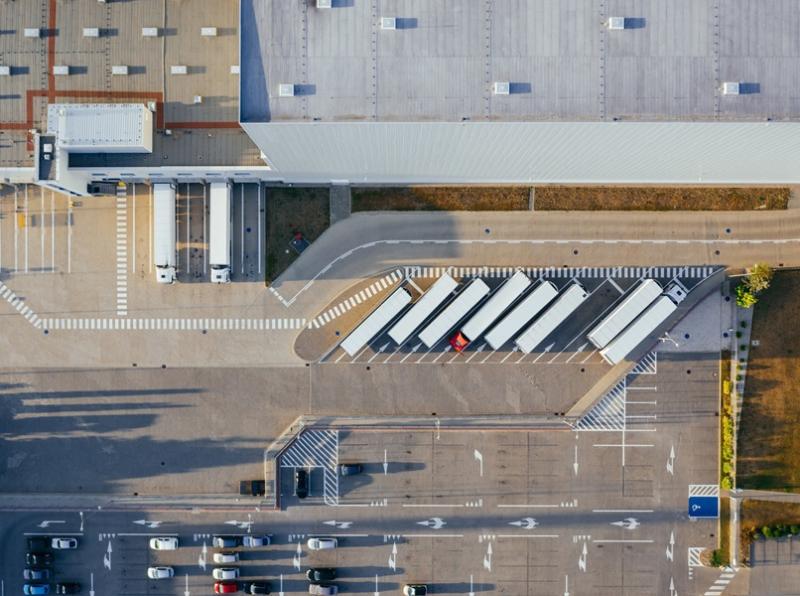
While the industrial sector will be hurt by new and increased tariffs, which could adversely affect manufacturing and warehouse facilities, the concern could again be worse than the reality.
“We thought it might really turn the market negative, and there was nine months of weakness, but I think it's still a pretty strong market,” said Jacobs.
“There are pretty good fundamentals, though maybe not as crazy as there used to be. I'm not sure this is enough to necessarily up-end those markets entirely.”
Office as an asset class should be relatively sheltered from the trade war since its occupancy is more dependent on other parts of the economy and more people returning to the office on a regular basis.
“If we're talking about the job market for lawyers, consultants, accountants and government employees, I'm not sure that tariffs have a huge impact one way or the other,” said Jacobs.
“Most markets are recovering, vacancies are coming down and rents are trending up again. I don't know if that will be dislodged just because we have tariffs on lumber, auto parts and cement in some of these areas.”
Inflation, interest rates and consumer spending
Jacobs believes that continuing high oil and gas prices caused by the Strait of Hormuz being largely shut down due to the ongoing conflict between the U.S. and Iran, preventing the export of significant amounts of Middle East oil, are likely to have a bigger impact on inflation and consumer confidence and spending than tariffs.
Inflation is unlikely to rise enough to prompt the Bank of Canada to increase interest rates to control it, but rate cuts also appear unlikely for the next year or more, according to Jacobs.
Consumer confidence and buying power may decrease somewhat and, while that could curb retail sales, it shouldn’t have a major detrimental effect on its real estate.
“Retail's been pretty resilient throughout the last year-and-a-half despite all this negativity,” said Jacobs. “You still see retailers expanding and you still see storefront, strip mall and power centre retail doing really well. So, I'm not sure this is enough to derail it.”
Buy Canadian
Manufacturers and retailers specializing in making or selling Canadian goods in Canada could benefit from another wave of anti-U.S. sentiment brought on by this latest salvo in the trade war.
“You've suddenly got a million angry customers who are ready to stop drinking American beer, wearing American fashion, buying American shoes and all of that,” said Jacobs.
“We'll have to see what the response is. I think those things flare up and then they tend to moderate a little bit.”
Domestic hospitality and tourism businesses could also benefit from the buy Canadian message many people are pushing.
“It's like we saw last year when the U.S. got all belligerent and then suddenly hospitality and tourism in Canada were doing great because people didn't want to travel to Florida,” said Jacobs. “Hotels are at capacity here and room rates are top dollar.”




 Industry Events
 Locations