
 Locations






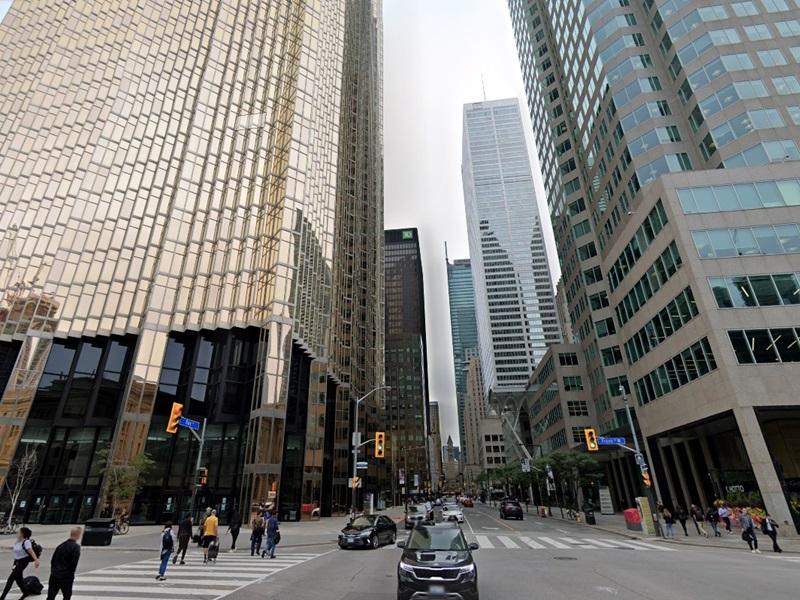
The Canadian office market ended 2025 with positive net absorption for the second year in a row, driven by large lease transactions in downtown Toronto, according to CBRE's Q4 office report.
Annual net absorption, a measure of office leasing activity, totalled 2.2 million square feet nationwide, with Toronto accounting for 2.65 million square feet of positive absorption on its own. Montreal had 269,000 square feet and Halifax had 231,000.
Vancouver, Edmonton, Winnipeg, London and Waterloo reported less than 100,000 square feet of absorption, either positive or negative, while Calgary and Ottawa reported the greatest market softenings with respective drops of 514,000 and 498,000 square feet.
“It is encouraging to see a second year of strong office leasing activity even though the office market recovery remains somewhat uneven,” CBRE Canada research managing director Marc Meehan said in a media release.
“We have worked through the bulk of the office decisions that had been delayed by the pandemic and increasingly office leasing activity is reflective of economic growth and talent availability, with Toronto benefiting most from the corporate commitments to office space at this stage of the recovery.”
Office vacancy rates
The overall national office vacancy rate dropped slightly to 18 per cent. The rates were 19 per cent for downtowns and 16.7 per cent for the suburbs.
Class-A office buildings continue to outperform other segments of the market, with declining vacancy in seven of 10 markets in the fourth quarter. Toronto’s vacancy rate dropped by 160 basis points while Montreal’s declined by 90 basis points.
National downtown class-A vacancy was at its lowest level in three years at 15.4 per cent, while the rate for downtown class-B and -C buildings remained above 25 per cent.
Trophy assets, which represent the top-tier office buildings with the best locations and amenities, have seen declining vacancy for four consecutive quarters. They had a national vacancy rate of 10.4 per cent.
With continued vacancy declines and an increasingly competitive environment for premium space, accompanied by more stringent corporate and public sector return-to-office expectations, demand is expected to soon spill over to the next best spaces. This trend is already being noted in Montreal.
Decrease in sublet office space
The amount of space being sublet by companies, often a sign of changing business plans or financial challenges, decreased by one million square feet in the fourth quarter. It was the 10th consecutive quarter of declining sublease space.
A total of 3.2 million square feet of sublets came off the market last year, the most since 2005. Only 11.4 million square feet of sublet space remains on the market, which is on par with 2017 levels when the office market was considered strong.
A higher frequency of space is being reclaimed by the sublessor, while some listings are converting to direct space following in-place lease expiries.
Toronto and Montreal led the decrease in subleases while the majority of remaining markets effectively held stable on a square footage basis. Calgary was the only city to see sublease space increase, which was related to mergers and acquisitions activity in the energy sector.
Limited office construction
A lack of new office construction has contributed to stabilization in the sector.
There was 671,000 square feet of new office space completed nationally last year, one of the lowest annual totals in more than 25 years. Just over half of this inventory was delivered in Vancouver.
Despite fewer deliveries, much of the new supply completed last year remains vacant and had one of the lowest levels of pre-leasing upon delivery in a given year.
Just 2.8 million square feet of office space is being built, 69.4 per cent of which is pre-leased. Two projects, in Halifax and Winnipeg and totalling 83,000 square feet, started construction in the last six months of 2025.
The 50-storey, 1.5-million-square-foot CIBC Square II in Toronto is the only significant project in development and is fully pre-leased. It’s due for delivery early this year.
Office conversions have an impact
Eight conversion projects removed more than a million square feet of office space from inventory in Q4, as landlords continue to strategically reposition dated assets. Calgary leads the major markets in total space converted and accounts for almost half of all office product removed from inventory since 2021.
Office to residential projects remain the most common conversions, accounting for 76.4 per cent of the space since 2021. Life sciences, education, hotel and mixed-use account for 21.2 per cent of conversions.
Conversion projects have removed a cumulative 7.8 million square feet of former office space since 2021. An additional 2.6 million square feet has been demolished over the same period. Together, they’ve helped reduce national inventory by 2.2 per cent.
Industrial space absorption and availability
National net absorption of industrial space jumped to 5.9 million square feet, largely driven by 5.3 million square feet of pre-leasing for new supply delivered in Q4, according to CBRE’s fourth-quarter industrial report. Quarterly net absorption was led by Toronto at 4.3 million square feet, followed by Calgary at 1.9 million.
Availability rates rose quarter-over-quarter in most markets, led by London with an increase of 190 basis points and Vancouver with an uptick of 70 basis points. Calgary’s availability rate shrunk by 80 basis points while Toronto’s decreased by 10 basis points.
“There is a healthy amount of industrial leasing and areas of strength, but fundamentals show some softness because we continue to build sought-after modern facilities despite softer demand overall,” Meehan observed.
Nine million square feet of new space was delivered in the quarter, while 22 million square feet were under construction. Calgary and Toronto accounted for 59.1 per cent of construction starts in the quarter.


 Industry Events
 Locations