Locations




Food has always brought people into real estate projects. Its newer role is helping owners create daily rituals, cultural identity and more durable asset performance.
Food used to sit quietly inside retail strategy. In malls, it helped stretch the shopping trip. In office properties, it served the lunch rush. In mixed-use projects, restaurants were often added when the leasing mix and economics allowed for evening activity. The uses were valuable, but they rarely carried the identity of the asset.
That has changed as food has become one of the most reliable ways people form attachments to places.
Restaurants influence travel decisions. Coffee shops shape daily routes. Markets, bakeries and local food concepts can become shorthand for an entire district.
People often describe places through the routines they support: where they get coffee before work, where they take visitors, which market makes a weekend stop feel worthwhile.
For landlords, the implication is practical. Traffic still matters, but frequency is the better measure of whether a place is working. Stronger assets create ordinary reasons to return across the day and week. Placemaking earns its keep when those visits become habits, not campaign-driven spikes.
Repeat use is the real prize
The Well in Toronto shows the operating logic. The project combines office, residential, retail, events, public space and urban foot traffic in one district. Within that mix, Wellington Market gives the ecosystem a daily and weekly rhythm. The 70,000-square-foot market includes more than 50 merchants, and recent reporting indicates it now exceeds 60,000 weekly visitors.
Food is not carrying the whole district on its own. No serious mixed-use asset works that way.
The strength comes from the way uses reinforce each other. A lunch visit can become an errand. A market trip can spill into retail. A resident’s weekday routine can overlap with office traffic, evening programming and weekend visits.
For owners, the test is blunt: does the food offer support adjacent tenants, longer hours of use, leasing confidence and a more stable traffic base? When it does, food becomes frequency infrastructure.
Food is also culture
Food has a particular advantage in placemaking because it operates as utility, experience and cultural expression at the same time.
A pharmacy may be useful. A bank may be necessary. A dry cleaner may support daily life. None of them usually gives a property a smell, a pace, a flavour or a social life.
A bakery changes a morning street. A local grocer can say something about who the neighbourhood serves. A restaurant cluster can give an otherwise generic development a more recognizable daily life. The full tenant list may blur; the coffee shop, market or counter that feels specific usually sticks.
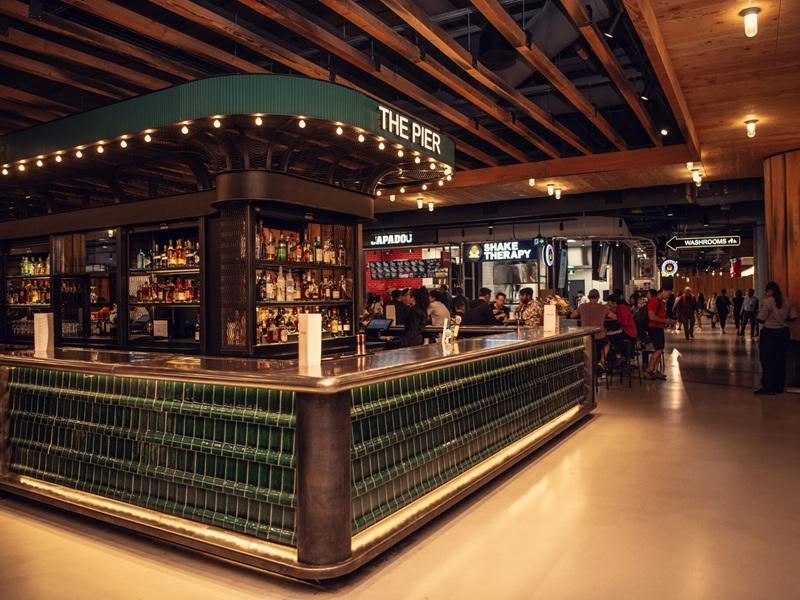
Time Out Market Montréal is a useful Canadian example because its value is not confined to food and beverage as a leasing category. It brings together recognizable chefs, local culinary references, events and cultural programming in a format that gives the property a clearer social role.
The offer is commercial, of course, but the visit extends beyond a meal. People go to meet, linger, discover and connect the asset to Montréal’s cultural life in a way a conventional food court rarely achieves.
That distinction matters for landlords. A project can have plenty of food and still feel generic. The stronger mix reflects local demand and creates moments people can recognize.
Curation becomes part of the asset strategy. The mix has to do more than fill bays; it has to make the property more useful in daily life.
When food and culture cluster
Research from the University of Cincinnati adds useful weight. Hyesun Jeong, an assistant professor in the College of Design, Architecture, Art and Planning, examined how murals and public art relate to street vitality, foot traffic and local commerce in Cincinnati.
Her study found that blocks with murals had nearly three times higher foot traffic than blocks without murals. Jeong also found that when murals were surrounded by 10 food-serving amenities in the same area, such as restaurants, bars and cafés, weekend foot traffic was nearly five times greater than the city average.
A later collaboration applying that research to Chicago’s South Side extended the same logic to commercial corridors. Working with the Greater Chatham Initiative and local partners, Jeong’s analysis found that corridors with 10 or more food-based businesses concentrated within a three- to four-block area can generate up to 500 per cent more foot traffic than comparable corridors with fewer than 10 such businesses.
The findings do not assign the result to food alone, or to murals alone. They point toward a more useful pattern for owners: concentrated cultural and commercial ecosystems perform differently from isolated amenities.
Murals, restaurants, cafés, walkable streets, local businesses and neighbourhood identity can reinforce one another when they are close enough to shape the same visit.
Food needs operating discipline
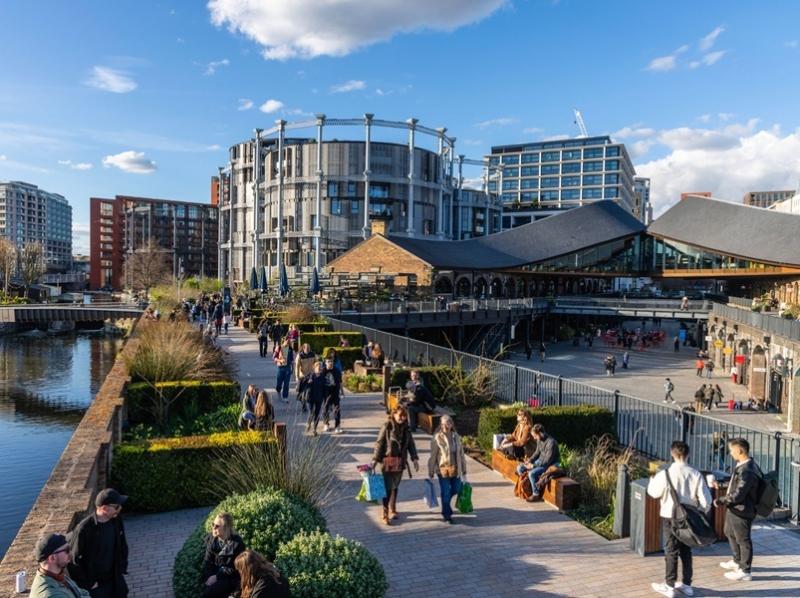
The same logic applies inside privately owned assets. A food hall or market can enjoy a strong opening and still lose energy quickly. After the first wave of curiosity, performance depends on less visible work: operator selection, hours, seating, beverage strategy, evening activity, programming and deal structures.
CBRE made a related point in a 2026 discussion on food halls, describing the strongest examples as amenities that can support dwell time, leasing velocity and NOI. That is a useful correction to the lifestyle language often attached to food concepts.
A busy launch weekend says very little. The better test comes six months later, when the space has to keep pulling regular users, office workers, residents and visitors through the property.
King’s Cross in London gives that discipline a public-realm version. ULI notes the estate’s 11 million annual visitors, 450,000 square feet of completed retail and public realm representing about 40 per cent of the site. At Coal Drops Yard, Yard Line Up brings rotating food and drink outlets, chefs and artisans into the district.
A converted Citroën van hosts guest chefs on weekends. Toklas Bakery covers weekday baked goods. A converted shipping container serves takeaway coffee and after-work drinks. Lower Stable Street’s Shōtengai Market adds recurring pan-Asian food, homeware and independent retail stalls.
These are modest interventions in a large estate. Their value sits in the repeat visit. They refresh familiar spaces, give regular users something new to notice and keep the food offer from going stale.
For owners, the discipline is operational: leasing, programming and day-to-day management have to work together.
The old anchor model was built around draw. The stronger model now depends on return.
Food creates ordinary occasions that can become routines. Left as filler, it remains another tenant category. Curated with cultural relevance and tied to the rest of the asset, it can help a property earn a place in people’s daily lives.





 Industry Events
 Locations