Locations





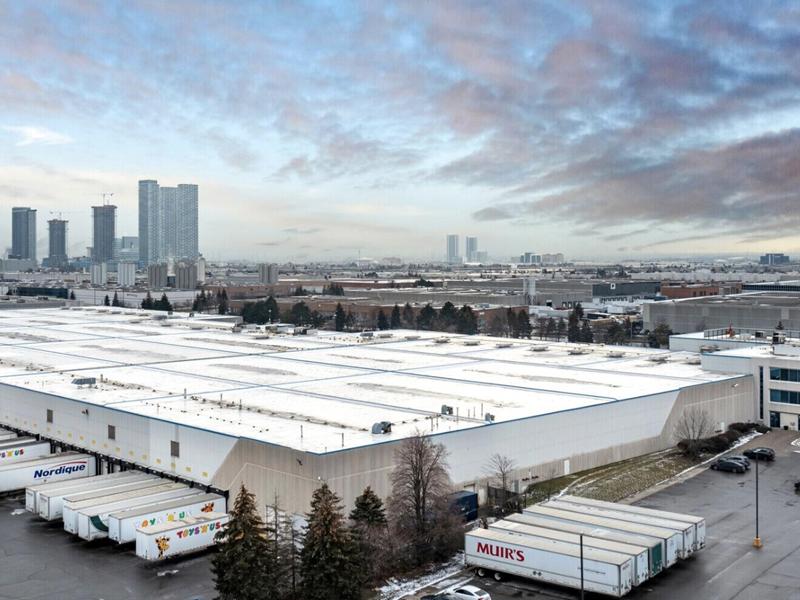
GUEST SUBMISSION: Walk through any of the mid-bay industrial areas in the Greater Toronto Area cities of Brampton or Mississauga right now and you'll notice something that wasn't true 18 months ago. Phones are active!
Tenants who spent the better part of 2024/25 sitting on their hands and waiting for a net rent bottom, hoping for leverage that hadn't fully materialized, are now back at the table with a few less functional options out there.
That shift is the single most important thing happening in the GTA industrial market in Q1 2026, and it tells you a lot about where we go from here.
This is a stabilization, not a recovery
Vacancy across the GTA has climbed into the 4.5 per cent range. This is a level that now appears to be finding a floor.
The rate of increase has slowed materially as it transitions from 4.5 per cent-4.2 per cent since Q4 of 2025, and in select submarkets we're seeing occupancy hold steady. That's stabilization, not a V-shaped recovery, but positivity for the landlord community.
Average asking net rents for older, functional product from the1980s and 1990s era with clear heights in the 18- to 22-foot range have drifted to roughly $15 to $16 net per square foot. That's a meaningful correction from peak levels north of $22 net per square foot and reflects where the real pricing pressure lives: second generation space that lacks the specification profile today’s occupiers demand.
Meanwhile, higher-quality new construction supply is still entering the market. This means landlords with newer product aren't immune to competition, but they're competing on a very different playing field with a little more power to manage their vacancy timeframe.
The Oakville, Burlington and Hamilton industrial markets also deserve some attention.
As GTA rents remain elevated, the western corridor is attracting occupiers who need the Greater Golden Horseshoe labour pool and highway access but have real cost constraints. It is no longer an afterthought submarket and is on the competitive market list when presenting to occupiers looking for their next location.
Occupiers, what does this mean for you?
If you're a tenant whose lease expires in the next six to 24 months, the window for meaningful negotiation is open. However, it won't stay open indefinitely.
The real opportunity is in older, functionally adequate buildings where net effective rents – factoring in free rent and landlord inducements – are materially below asking. When you have a private landlord on the other side of the table, and there is fear of vacancy downtime, the receptiveness to induce and attract a tenant can provide the occupier with a sweet deal!
The more significant trend is the flight to quality. Tenants are using lease renewals and relocations to upgrade for better clear heights, ESFR sprinkler systems, modern power capacity, yard depth that accommodates today's trailer requirements and frankly, a landlord that may finally accept not such a squeaky-clean use or covenant.
Older product that can't compete on spec is sitting.
North York, Mississauga and Brampton are where transaction volume is concentrated. Expect more competition for the right buildings than the headline vacancy number suggests.
What this means for GTA landlords and investors
Investment sales remain muted. Buyers and sellers spent most of the past 18 months in a standoff, with sellers anchored to 2022 peak valuations and buyers pricing in cap rate expansion, rent uncertainty and how much less the bank will help now.
That gap is closing. Cap rates have adjusted and the asking price and transacting price spread on quality GTA industrial assets is narrowing.
For landlords managing existing portfolios, the priority is occupancy over maximum rate hikes. A vacant unit or building in a 4.2 per cent vacancy market is a cash-flow problem.
Go forward outlook
The GTA industrial market is moving through a normal, but uncomfortable correction. The fundamentals that drove a decade of outperformance – extremely tight development land supply, a deep labour market, irreplaceable proximity to over 15 million consumers – has not changed. What has changed is the expectation of effortless rent growth.
That era is over, for now.
The market that replaces it rewards operators who understand the landlord's current heartburn: which submarkets are tightening, which product vintages are losing the functionality and efficiency battle, where the next wave of demand is coming from.
Brokers, landlords and investors doing their homework in Q1 2026 leading into Q2 are the ones who will be well positioned when the next cycle accelerates.




 Industry Events
 Locations