Locations








“The housing sector has dealt with a series of successive, almost concussive blows,” according to Minto Group chief executive officer Michael Waters, who addressed those issues and some of the measures being taken to try and remedy them in an interview with RENX.
Minto was formed in Ottawa in 1955 and since that time has built more than 100,000 homes and managed billions of dollars in assets, including multi-residential units and commercial spaces, so Waters’ perspective has a wealth of experience behind it.
Among the blows the Canadian housing sector has endured this decade cited by Waters were:
- the COVID-19 pandemic and the fiscal response to it, which drove up property values;
- inflation and the monetary response that increased interest rates;
- concerns with mortgage and condominium defaults;
- wild swings in population growth stemming from immigration policy changes;
- the federal foreign purchaser ban and accompanying provincial restrictions; and
- 21 straight months where average asking monthly rents have fallen.
Slowing apartment and condominium starts
Waters said the Canada Mortgage and Housing Corporation’s MLI Select and Apartment Construction Loan Program helped spur new purpose-built rental apartment development but he believes starts are slowing, which could mean a lack of housing when immigration starts picking up again.
Meanwhile, there are very few condo starts in Toronto and no indications they’ll make a major comeback in the near term since the absorption of existing inventory is expected to take a couple of years.
Waters pointed out that while Toronto and Vancouver (two cities Minto is active in) may dominate housing news, the Canadian market should be viewed regionally and not as one monolithic block.
“When you think about other markets — like Halifax, Ottawa, Quebec City and a lot of the prairies — they didn't see the same excess in the run-up and haven't seen the same correction even though they’re still dealing with a lot of the same issues, such as higher mortgage rates, which is impacting affordability, and immigration policy changes,” he said.
“And in some markets, development charges have been more impactful than they have been in others. The GTA (Greater Toronto Area) obviously has been very reliant on development charges while other markets don't have them.”
HST relief in Ontario has helped lowrise sales
The temporary 13 per cent harmonized sales tax (HST) relief in Ontario, which came into effect on April 1, has spurred lowrise housing sales in the GTA and Ottawa but hasn’t had a significant impact on condo sales. Waters is unsure if that early momentum can be maintained but he’s hoping it at least settles at a higher level than before the HST relief.
“Lowrise builders in Ontario weren't carrying a lot of standing inventory so these sales are largely pre-sales that will spur housing starts,” said Waters. “That will add to supply so that will help.”
The industry is waiting for more details on how development charge relief could be implemented, as it should involve federal, provincial and municipal governments working together to come up with ways to fund infrastructure that won’t potentially hurt housing development.
“Maybe there's no silver bullet that eliminates development charges completely, but can we look at other models used in other jurisdictions?” Waters suggested. “One we pointed out to policymakers has been the use of utility district financing in some U.S. jurisdictions like Texas and Florida as a possible policy alternative to complement development charges.”
Federal officials are listening with interest, according to Waters, who thinks the Mark Carney-led government has “gone from seeing industry players as the opposition to seeing industry players as part of the solution” in coming up with sustainable housing policies.
Waters would also like to see more foreign direct investment in the Canadian housing market to spur new supply.
Current Minto projects
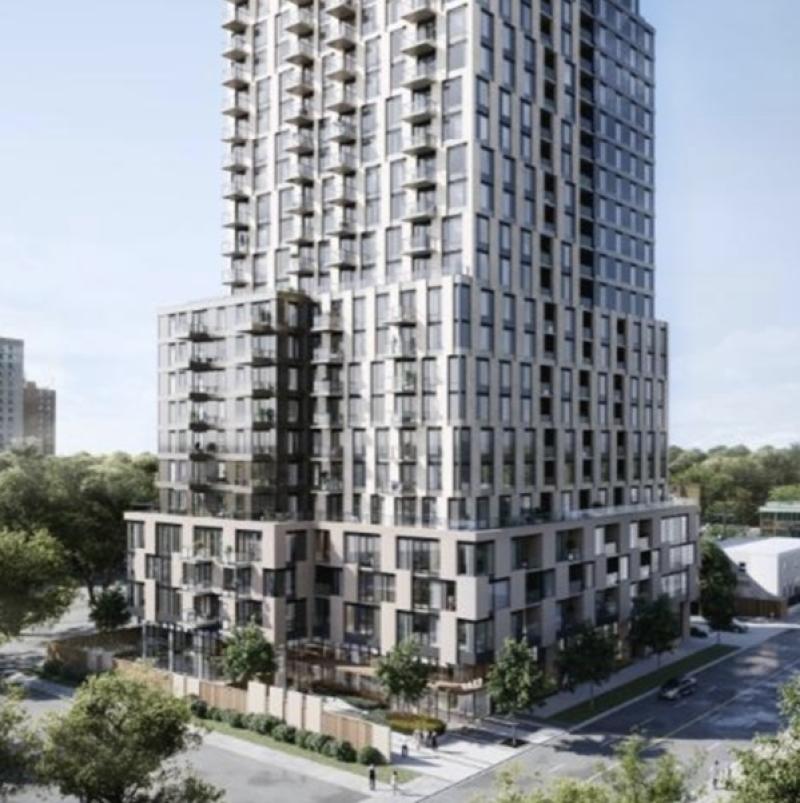
Despite facing all of the above-mentioned issues, Minto continues to remain active on the development front. It has brought five new pre-construction lowrise communities to market in the GTA and Ottawa since April 1.
“Customers remain choosy,” said Waters. “They're still price-sensitive but, with this relief on the HST, it's spurred a lot of interest — which has been fantastic. We’re very happy with the reception we've received on that.”
Minto is also developing highrise purpose-built rental apartments in the Greater Vancouver Area, Toronto and Ottawa.
Construction is slated to start this fall on two 19-storey buildings with a combined 365 units on West 7th Avenue in Vancouver. They’ll complement Minto’s nine apartment buildings that are either already completed or under construction in British Columbia.
Construction began on the 24-storey, 325-unit Cordova on Cordova Avenue in Toronto and the 16-storey, 214-unit Wellington + Parkdale (which will also have 12,000 square feet of commercial space) on Wellington Street West in Ottawa last year, while other apartment buildings are in the lease-up stage. Waters wants to develop more, but challenges remain.
“Historically, you could count on regular growth in your rental rates,” said Waters. “But in the last 21 months we've seen rates fall nationally.
“It’s not true everywhere, but certainly places like Toronto, Ottawa and Vancouver have been very much impacted, and that's made it tougher for developers to get some of these projects to pencil.”
Minto cancelled a proposed condo that was in the pre-sales stage in Oakville, Ont. last year because it wasn’t generating enough sales to be able to get construction financing.




 Industry Events
 Locations