Locations



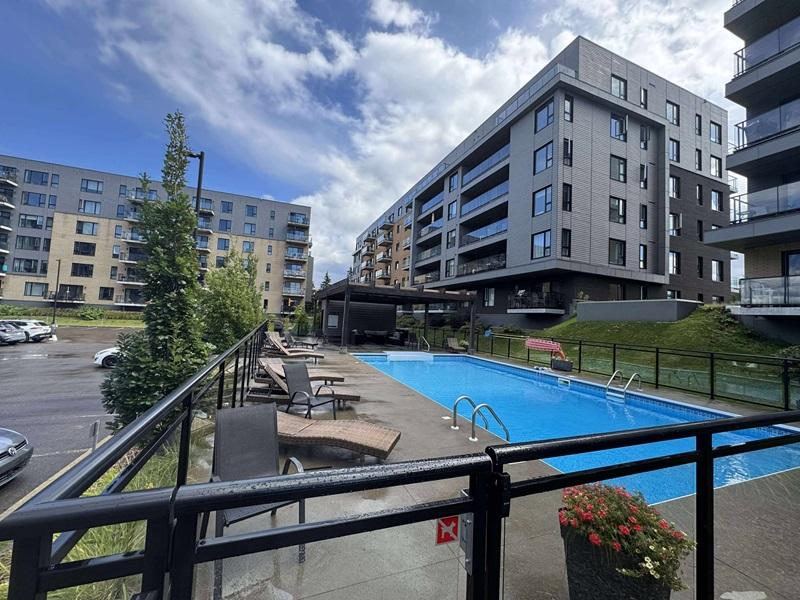
GUEST SUBMISSION: A development shift is underway in Québec City. While suburban development continues, an increasing share of Québec City’s new housing supply is coming from the redevelopment of existing sites and underutilized land and buildings in established areas, creating a new phase of multifamily real estate investment in the city.
Founded in 1608, Québec City is one of the oldest cities in North America and the second-largest city in the province after Montréal, with a metropolitan population of roughly 850,000. Despite its size, many residents who grow up in Québec City remain there throughout their lives, giving the municipality a tight-knit community feel.
The local businesses that dominate the real estate sector in Québec City often describe their hometown as a “grand village.”
Purpose-built rental housing, largely dominated by local private developers, is now attracting more institutional investors and pension-backed capital as Québec City’s rental market remains among the tightest in Canada.
Lower land and development costs
Apartment vacancy rates have hovered around one to two per cent in recent years. Compared to larger Canadian markets such as Toronto, Vancouver and Montréal, Québec City offers relatively lower land costs and development costs, which helps projects remain financially viable even as construction costs and interest rates remain elevated.
In Québec City, we are also seeing a lifestyle trend with long-time residents aged 55 and older that is helping drive a new wave of multifamily residential development across the city. This group, who are downsizing from their homes, are seeking a lifestyle with less home maintenance and easy access to restaurants, cafés and everyday services.
This trend, combined with growing demand from university students and young professionals for more urban living, is fuelling urban intensification in areas just 15 minutes outside the core.
New developments are combining residential density with retail, services and community uses, including mixed-use communities with 800 to 1,000 units, bringing a new scale of multifamily real estate development to the historic city.
Activity concentrated in three areas
This activity is mostly concentrated in several neighbourhoods, including Vanier’s Fleur de Lys redevelopment area, the revitalizing Saint-Roch downtown district and the Sainte-Foy corridor near Université Laval.
Office-to-residential conversions are also beginning to emerge in Québec City, particularly in older office buildings where vacancy has increased. Examples include the office building at 880 Chemin Sainte-Foy in the Montcalm district, which is planned to be converted into more than 300 apartments, as well as the conversion of the former Royal Bank office building at 700 Place D’Youville into approximately 115 residential units.
While office-to-residential conversions are still relatively limited in Québec City, and often difficult to achieve due to costly and complex redesigns and retrofits of floorplates and mechanical systems, projects like these suggest that converting older office buildings could become an efficient way to help meet housing demand in already well-connected commercial areas.
Similarly, renovations and repositioning of older rental buildings are becoming more common, particularly in established neighbourhoods such as Limoilou, Vanier and parts of Sainte-Foy, where many apartment buildings date from the 1960s through the 1980s. Many of these older rental buildings are being acquired and renovated by investors, who are repositioning the properties and enhancing their value, through unit upgrades and building improvements.
However, most of the new rental supply entering the market is still coming from ground-up construction, particularly midrise apartment buildings and residential-focused mixed-use developments.
Trudel’s Fleur de Lys $1.5B redevelopment
A notable example is Trudel Corporation’s Fleur de Lys redevelopment, a $1.5B masterplan that will transform the former Fleur de Lys shopping centre site, which is roughly three million square feet in Québec City’s north end, into a mini city of its own. When completed, the redevelopment is expected to bring approximately 3,500 residential units, 700,000 square feet of commercial space, 300,000 square feet of office space, a hotel, a university campus and new parkland.
Another example of the mixed-use densification approach, but at a much smaller scale than Fleur de Lys, is DMA/Ivanhoé Cambridge’s new development at Laurier Québec. The project will add a 276-unit residential rental building and three commercial spaces to an existing shopping centre site.
While construction activity in Québec City remains active, shifting market dynamics are causing developers to move more cautiously into 2026 and 2027, which is slowing down the volume of new construction starts compared to the last two to three years.
Some are in a wait-and-see mode, while others are revisiting their designs and financial assumptions to ensure their next projects remain viable. These shifting dynamics include a slowdown of immigration into the province, international student restrictions, and growing construction cost pressures.
While the rental market is still relatively stable compared to other cities, tightening CMHC lending criteria and evolving program requirements under MLI Select are also putting new pressures on development pro formas, ranging from higher equity contributions to more conservative underwriting.
Demand expected to remain high
Despite some new headwinds, overall demand for multi-unit residential development in central Québec City locations is likely to remain strong, as the local population continues to seek new housing options in more urban areas and development costs remain relatively lower than in many larger Canadian markets.
Québec City’s historic port, distinctive architecture and compact urban form also make it a unique and attractive place to live, while the tight-knit real estate development community supports a reliable local business environment and strong project partnerships. It is all of these qualities, together, that I believe will continue to support a stable and resilient real estate investment environment in Québec City.


 Industry Events
 Locations