
 Locations







The Canadian purpose-built student accommodation (PBSA) market is dominated by companies with small portfolios, but companies like Forum Asset Management and Fitzrovia are looking to expand quickly in the sector.
There are 73 PBSA brands with two or more assets under the management of one operator that operated 455 properties with 72,416 beds in Canada, according to BONARD, a global market research and consulting firm that specializes in rented residential asset classes.
Canada has a PBSA beds per student provision rate of 12 per cent, compared to 23 per cent in the United States and 28 per cent in the United Kingdom. A rate of 35 per cent is considered optimal.
The off-campus housing share of the PBSA market is 29 per cent in Canada, 58 per cent in the U.K. and 60 per cent in the U.S.
There’s obviously room for growth.
Comparing Canada and the United States
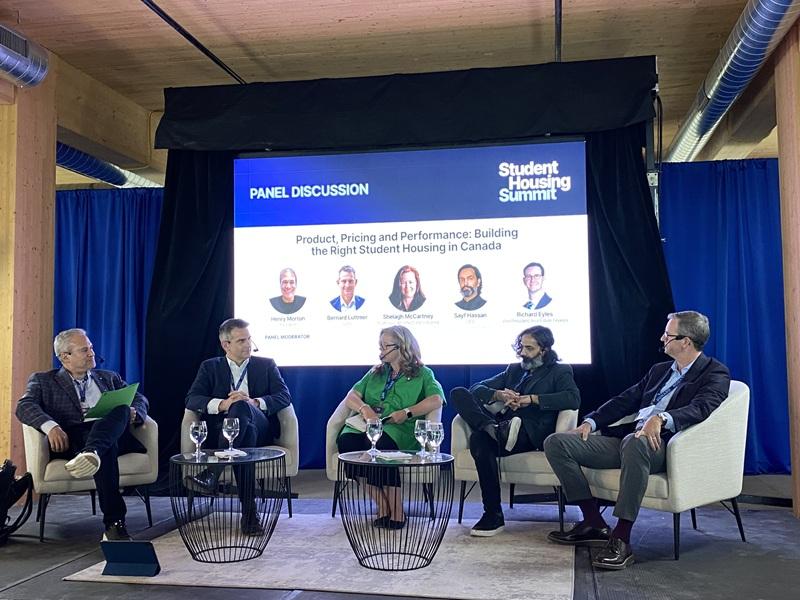
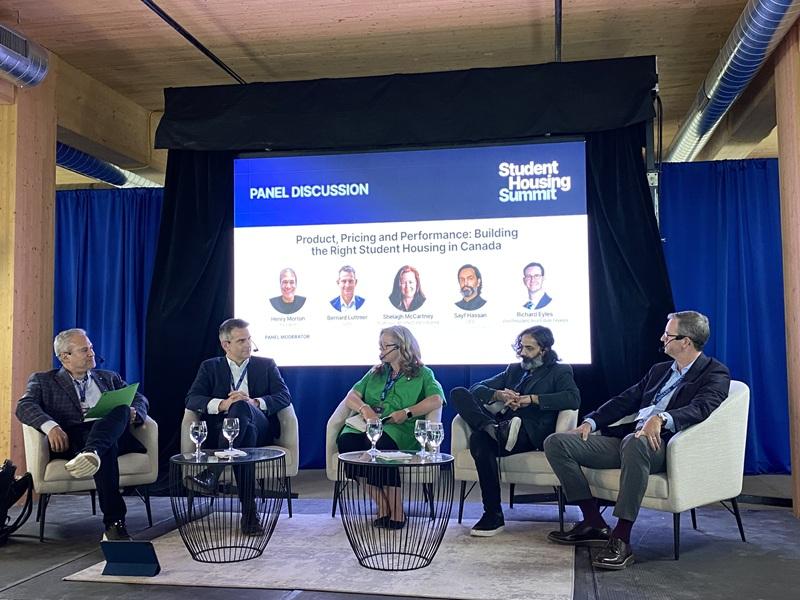
BONARD organized the recent Student Housing Summit at Toronto’s T3 Bayside and one of the areas addressed was scaling up small portfolios to become platforms.
“Scaling is an aspiration for every investor, every creator and every developer, but scaling comes with risks,” said BONARD senior real estate consultant Kristin Peycheva, who noted there may also be additional risks in a country as expansive as Canada with a population that’s low relative to its size.
Alex O’Brien is the chief executive officer of Cardinal Group, a Denver, Colo.-headquartered fully integrated real estate investment, development, management, construction and marketing firm that operates about 120,000 student beds and has a development pipeline worth approximately US$1 billion.
“There are probably 100 to 120 universities of significant scale that are investable, have quite a bit of liquidity and a lot of new developments across the U.S.,” said O’Brien, who noted that’s a much higher number than in Canada.
There are close to 1.4 million off-campus PBSA units in the U.S. The top 10 owners control close to 80 per cent of them.
“The trend has been very pronounced over the last decade in terms of scale platforms continuing to take more and more of the market share in development, capital deployment and operations,” said O’Brien.
The European PBSA market and Canada
DWS is a German-headquartered asset management firm that’s nearly 80 per cent owned by Deutsche Bank and which has approximately $1.09 billion in assets under management. This includes a considerable PBSA portfolio in the U.K., which managing director Simon Wallace said is by far the largest PBSA market in Europe.
The U.K. currently has an oversupply of PBSA and is going through a price correction, so DWS is now seeing more opportunities for expansion in Germany and Spain. While the PBSA provision rate in Canada is low and provides growth opportunities, Wallace doesn’t think it’s yet at the point where it would attract German investors.
Hines senior managing director and head of Canada Avi Tesciuba said his company has launched a PBSA platform across several European countries and thinks there’s potential to replicate that in Canada.
He thinks there are more risks from a management perspective than as an equity owner when it comes to scaling.
“If you're trying to offer a service and don't have the expertise and the boots on the ground and the talent in house to offer that service, I think you run a risk that you're not offering differentiated enough products and you can start losing tenants,” said Tesciuba.
Forum Asset Management
Forum Asset Management is the leading investor in Canadian PBSA, with 93 per cent of the beds in its 32-property, $2.9-billion portfolio dedicated to students. Most of its growth has been through development since there haven’t been many newly built, quality PBSA properties available to acquire.
“Five years ago, you were actually rewarded as a poor operator because you got turnover and then the rents would increase and you would be able to mark to market,” said Forum managing director Aly Damji.
“In today's softer market, you're competing with really sophisticated multifamily developers in most markets and you're competing with other student housing operators. Operations really matter.”
Forum has developed strong relationships with the Canada Mortgage and Housing Corporation (CMHC) and Tier 1 lenders, which are starting to look at PBSA as more of a core asset class, to help it grow.
“When you're focusing on one-off assets, we could finance a $100-million project pretty easily in this market,” explained Damji. “When you're trying to grow a platform and you start hitting lender limits or have to go through multiple reviews with CMHC, given what they offer, it's important to stay close and advocate for greater policies that enable building.”
Fitzrovia and Waverley
Toronto-based Fitzrovia is the largest purpose-built rental apartment developer in Canada, with about 12,500 units valued at around $11 billion under management.
The vertically integrated company announced last year that it will build student-focused housing under its Waverley brand on land near universities in the Ontario cities of Toronto, Kingston, Guelph and London. It also plans to do the same in Western Canadian cities.
“We think there's a first mover advantage in building a brand of scale in this market, and the quicker we can do that the better,” said Fitzrovia CEO Adrian Rocca.
“We want to get this to a $3- to $4-billion portfolio over the next 10 years. We want to focus on good secondary markets within a two-hour drive of Toronto so we can leverage our construction and development expertise, and we want to double down in the big three cities of Toronto, Montreal and Vancouver where we already have a presence.”
Fitzrovia wants to avoid university partnerships and develop its PBSA on private land, either directly adjacent to a university or on a main entertainment node, Rocca said. He added that using Fitzrovia’s in-house personnel enables it to build 12 to 15 per cent cheaper than if it used general contractors.



 Industry Events
 Locations