Locations
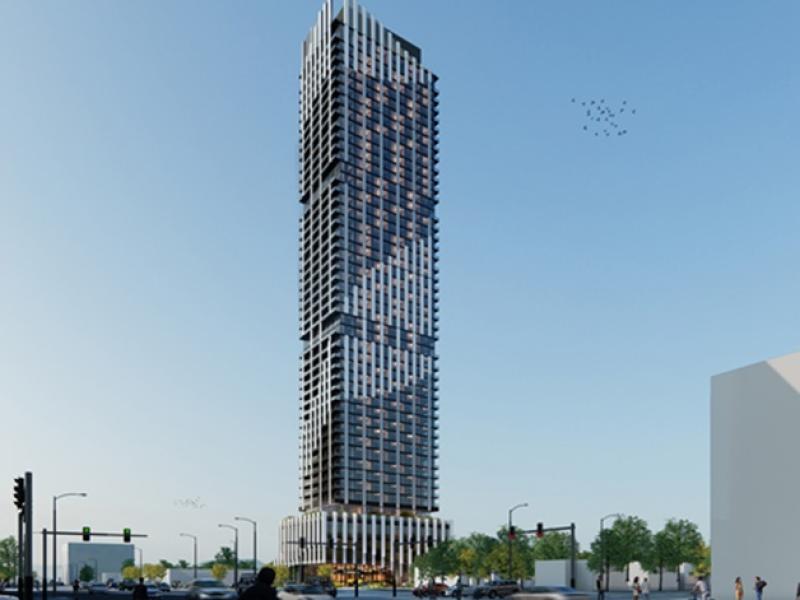






GUEST SUBMISSION: Toronto’s condo market boiled over and then it froze. And as the condo crash continues, the word "condo" has become a dirty word to developers, investors and future homeowners alike.
The two-decade condo boom transformed Toronto's skyline and came to symbolize growth. But the model that promised connected, affordable and walkable urban living largely fell short when it stopped designing homes around the people who would actually live in them.
The lesson is not that Toronto no longer needs condos, it’s that the system behind them needs to change.
According to reporting by Urbanation, just 246 condos sold across the GTHA in the first quarter of 2026 – a figure 94 per cent below the 10-year average with zero new project launches for the first time in three decades.
For developers and investors, they’ve become a risky venture. For first-time buyers who want to mimic the single-family homes they grew up in, they’re often thought of as a second-choice or a temporary home.
The condo market disconnected from long-term homes
The market didn't freeze because of one bad decision or one bad actor. It stalled because a system that rewarded condos as investment products became disconnected from condos as long-term homes.
With more than 20 years in development and a recent appointment as Chair of the Urban Land Institute (ULI) Toronto Chapter, I’ve seen first-hand how vertical density can create thriving communities for a wide range of ages, incomes and household types. I’ve also seen how vertical density in Toronto has stumbled.
In a market focused on speed, Toronto emphasized what could sell quickly: buildings with striking exteriors and compact units. Condo buildings were seen as standalone assets rather than as part of a broader community connected to parks, services and amenities.
Weaknesses of the pre-sale model
The pre-sale model, as many post-mortems of the condo market have noted, did not help. Because lenders typically require 70 per cent of units to be sold before releasing construction financing, developers were pushed to design for the buyers most willing to commit years before a building existed – namely investors purchasing assets, not future residents.
A poor mix of approval timelines, a pre-sale system and financing requirements shaped what could get built.
When interest rates rose and construction costs climbed, the model began to crack.
But there’s danger in conflating Canada’s condo slowdown as proof that Canadians no longer want – or need – vertical density. Condos will continue to play a critical role in meeting Canada’s housing demand.
The question is not as simple as asking how we build better towers, but how we create the complete communities within and around them. The focus needs to shift to creating places where people can build relationships, access their daily needs, raise families and age in place.
Vertical density is still essential
Canada, and especially Toronto, is growing. CMHC estimates the country will need to build roughly 430,000 to 480,000 new homes every year to restore housing affordability by 2035. Vertical density will be one of our best allies and a way to sustainably use land and resources.
The opportunity now is to use incoming growth and the market disruption to build better condos that are more flexible, durable and livable, inside neighbourhoods designed to support a wider mix of incomes, ages and lifestyles.
City-builders and developers can better consider the daily experiences of the people who would live there long-term. For Toronto's young talent, that means homes near transit, jobs and culture which make it possible to stay and build a life in the city.
When it comes to families, they too need homes with enough space to stay in the city as their needs evolve, rather than having to choose between density and livability. Think larger front hall vestibules for strollers, sightlines from the kitchen to the living room and short hallways that can separate noisy and quiet spaces.
Seniors too would benefit from low-maintenance homes close to transit, care, groceries and community life. But they need accessible layouts, storage, flexible space for changing needs and an atmosphere of supportive social connection, all within mixed-use communities where they can contribute to local businesses and public space.
Condos should not be one-size-fits-all
Overall, the name of the game is diversity. The condo model needs to move away from the one-size-fits-all product and build many options inside complete communities, informed by what’s in between them and neighbouring housing.
As executive vice president of development at Northcrest Developments, I've been able to put these lessons into practice as we steward YZD, the 370-acre former Downsview Airport lands that will house more than 66,000 people in the heart of the GTA.
Rather than retrofitting, we can plan complete city blocks with strategically placed towers, midrise buildings, mixed housing types, parks, public spaces, employment, culture and community – all in a single, fluid place.
Yet Northcrest is only one voice in a large conversation. If the next generation of condo development is going to rebuild trust in vertical living, it has to start with a simple human question: what makes a good place to live?
Great cities around the world rely on density to curb sprawl, support walkability and help businesses and community services thrive. People want more than a roof over their heads.
They want to know their neighbours, establish routines, raise families, age in place and feel connected to the communities around them. If Toronto gets that right, we won't just build more housing – we'll create places where people feel like a key part of the city.



 Industry Events
 Locations