Locations





While Canadian hotel trade volume was down two per cent through the first six months of 2026, and the number of hotels sold fell by 10 per cent to 65 when compared to a year earlier, the market remains liquid and people are looking to buy.
“A lot of new private investors who maybe dabbled in multires or industrial are now looking at hotels,” Colliers Hotels senior director Fraser Macdonald told RENX.
The debt side of the equation is also as strong as he has ever seen it in his 13 years at Colliers, he added.
“There are a number of lenders that have now set up hospitality platforms dedicated to looking after the hospitality industry across Canada,” he said.
“Credit unions were always there, but we've seen the larger banks taking a closer look and doing deals that we would not assume that they would do before.”
Average deal size was up 8%
The average deal size, according to Colliers Hotels’ INNvestment Canada Hotel Report Q2 2026, was up eight per cent year over year to $13.4 million while the average price per key was down 15 per cent to $163,000.
Full-service hotels accounted for $467 million in transaction volume and an average price per key of $199,000, while those respective numbers were $339 million and $124,000 for limited-service hotels and $136 million and $183,000 for focused-service hotels.
Compared with the first half of 2025, limited-service volume increased by 36 per cent while focused-service volume declined by 43 per cent. Limited-service hotels are easier to operate and carry a lower price tag, which makes them attractive.
“Seventy per cent of the deals are under $10 million, and that's the reality of the Canadian lodging sector,” said Macdonald. “Major markets contribute a good amount of volume, but there’s a lot more trading in secondary and tertiary markets.”
Western Canada-led activity
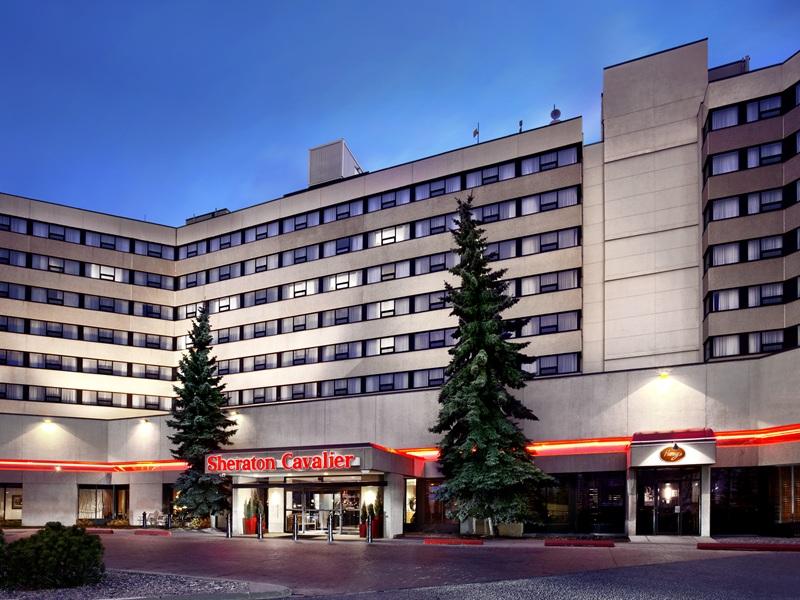
Approximately $432 million in hotel transactions closed during the second quarter — led by the River Rock Casino Resort in Richmond, B.C., Sheraton Cavalier Calgary Hotel and Holiday Inn Express & Suites Downtown Ottawa East — which combined to account for 40 per cent of quarterly volume.
Alberta and British Columbia represented 68 per cent of national investment volume — supported by major transactions in Victoria, Greater Vancouver and Calgary — along with broad trading across secondary markets.
Five Greater Victoria hotel sales totalled $245 million through the second quarter, representing more than 25 per cent of national volume, led by Hotel Grand Pacific and Huntingdon Hotel & Suites.
Ontario accounted for 21 per cent of national volume, well below its historical contribution, despite strong investor interest. Activity was concentrated in smaller regional properties, with relatively few banner transactions in major markets in the first half.
“It's very unusual that it's so tilted to the West,” said Macdonald. “Ontario itself typically generates close to 50 per cent of the volume.”
Macdonald noted, however, that much of the capital used to acquire hotels across Canada still comes from Ontario.
Owners are content to hold properties
The strength of the domestic hotel market, which has been buoyed by fewer Canadians travelling to the United States due to trade-related and other tensions, has spurred growth in revenue per available room.
Owners that are happy with the cash flow being generated are less likely to sell their properties, which has resulted in a lack of available product to buy. Hotel development has subsequently been picking up, according to Macdonald.
“Barring any major new assets coming to market, this maybe won't be a record year for overall volume, but I think it's going to continue to be a strong one operationally,” he said.
“Pricing across the board is strong but, at the end of the day, the asset has to make sense. I think when the asset is a quality asset — whether it's a good location, a good brand or performing well — there's a long lineup of lenders and buyers.”



 Industry Events
 Locations