Locations



Anyone negotiating industrial leases in Canada right now has noticed the pattern.
Vacancy is up in most major markets, tenants have more options than they have had in years, and yet posted rental rates have barely moved. Institutional landlords, REITs, and pension funds are protecting face rents because those numbers drive asset valuations and refinancing conversations. Rather than cut the rate, they are closing the gap with incentives: free rent periods, tenant improvement allowances, and flexible terms.
That incentive toolkit is now expanding into territory that most real estate professionals have never had to think much about: the racking.
From rent discount to fixturing credit
A rent reduction is the least efficient concession a landlord can make. It permanently lowers the income stream the asset is valued on, it sets a precedent for renewals and comparables, and the tenant often barely registers it because the savings are diluted across years of monthly payments.
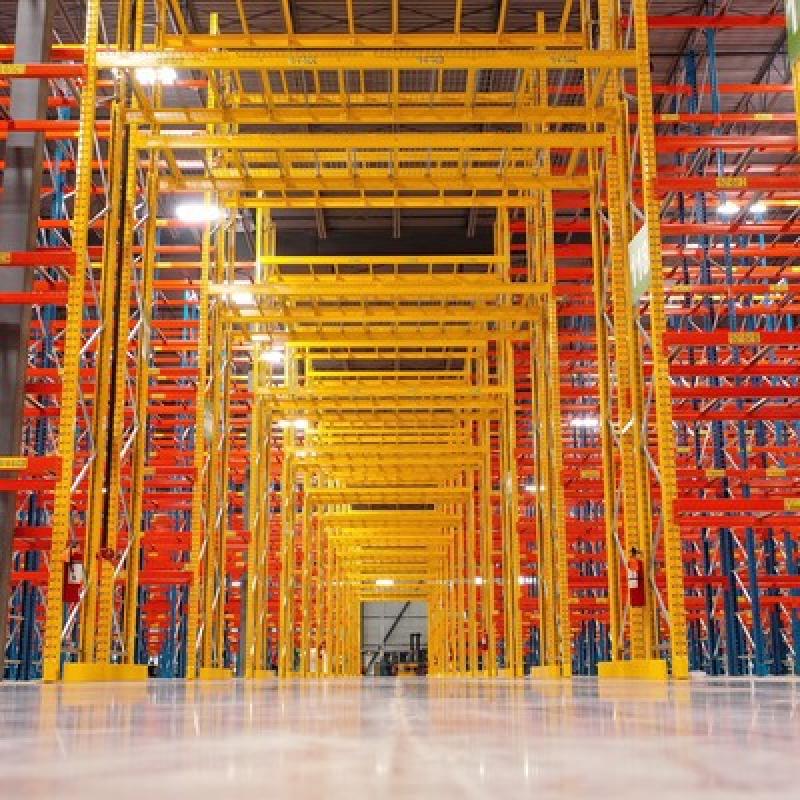
A fixturing credit works differently. A landlord who offers a defined credit toward the design and installation of a pallet racking system is giving the tenant something they can see, touch, and put to work on day one. For a distribution or manufacturing tenant, racking is not a nice-to-have. It is the infrastructure that determines how many pallet positions the building actually delivers, and a new facility cannot generate revenue until it is in place.
The math tends to favour the landlord too. A racking credit is a one-time, bounded cost rather than a permanent haircut to the income stream. And unlike a free rent period, it leaves something behind. Racking engineered for the building, anchored to the slab, and documented for code compliance can become a genuine leasing asset the next time the space turns over, particularly in a market where demisability and speed to occupancy increasingly separate buildings that lease from buildings that sit.
The bigger shift: racking as OpEx, not CapEx
The fixturing credit is only half the story. The more interesting development is a change in how the racking itself gets paid for.
Traditionally, racking has been treated as a capital purchase. The tenant scopes a system, secures capital budget approval, buys it outright, and depreciates it over years. That model has two problems in the current environment. First, capital is expensive and finance teams are guarding it closely. A racking system for a mid-size distribution centre can run well into six or seven figures, money that is not going toward inventory, equipment, automation, or hiring. Second, capital approval cycles of that size can add weeks or months to a project at exactly the moment a tenant is racing toward occupancy.
Leasing and financing structures solve both problems by moving racking from the capital budget to the operating budget. Instead of one large cheque, the cost becomes a predictable monthly operating expense, sitting alongside rent, utilities, and equipment leases. For many tenants, an operating expense of a few thousand dollars a month clears internal approval in days, where a capital request for the same system would have taken a quarter.
There is a conceptual shift underneath this that the industrial world is only beginning to absorb: access over ownership. Racking does not need to be owned to be used. Like the forklift fleet, like the building itself, it can be leased for its useful purpose, with ownership treated as optional rather than assumed.
The structures available today go well beyond a simple payment plan. Engineering, design, project management, and installation can be folded into a single financing arrangement, so the entire storage project moves as one monthly line item. Deferred payment options can even allow the system to be installed and generating throughput before the first payment comes due, a meaningful relief for a tenant absorbing fit-out costs, moving expenses, and overlapping rent.
Aligning the racking term with the lease term
Where this gets genuinely elegant is in term matching. A racking lease can be structured so its term runs concurrently with the building lease. A tenant signing a five-year lease takes on a five-year racking term. The two obligations begin together, end together, and can be renewed together.
At expiry, the tenant has clean options. Renew the building lease, and renew or refresh the racking with it. Relocate, and either exercise a buyout to take the system along, or simply leave it in place. That last option is worth pausing on, because it is where tenant and landlord interests genuinely converge: the tenant sheds a decommissioning and removal cost that routinely surprises departing occupiers, and the landlord inherits a racked, code-documented building it can market to the next logistics tenant at a premium, or fold into its own incentive package for the next deal.
What this means for real estate professionals
For brokers and landlords, the opportunity is to bring these structures into the deal itself. A landlord or real estate firm can offer racking credits or financing directly as part of an inducement package, differentiating a listing without touching face rent. Alternatively, tenants can be pointed toward established third-party leasing programs offered directly through the racking manufacturer, keeping the structure off the landlord's books entirely while still giving the tenant the OpEx treatment.
Either way, the professionals who can walk into a negotiation and say "we can also solve the racking, and you will not need capital budget to do it" are offering something most of the market still is not.
As one of Canada's leading manufacturers of pallet racking and industrial storage systems, North American Steel offers flexible leasing and financing options through an established financing partner and would be happy to discuss how racking credits and OpEx structures could fit into your next lease deal.



 Industry Events
 Locations