Locations
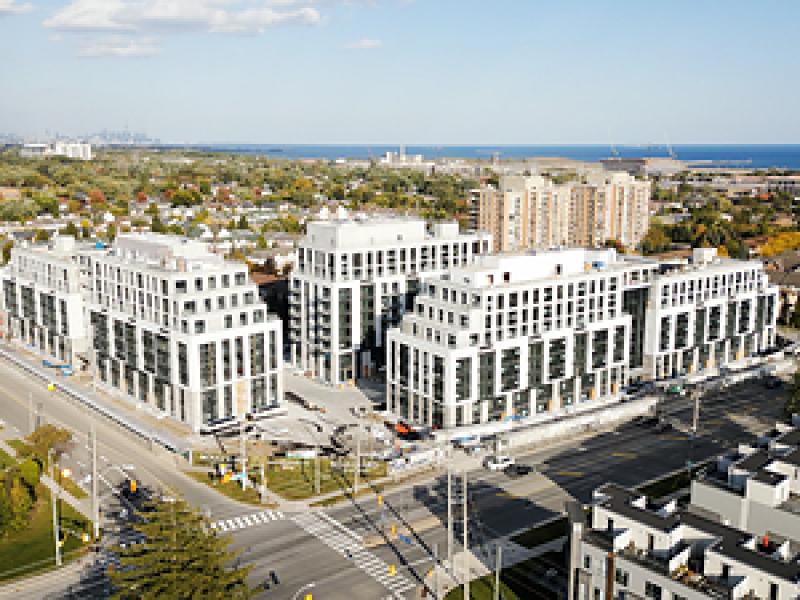

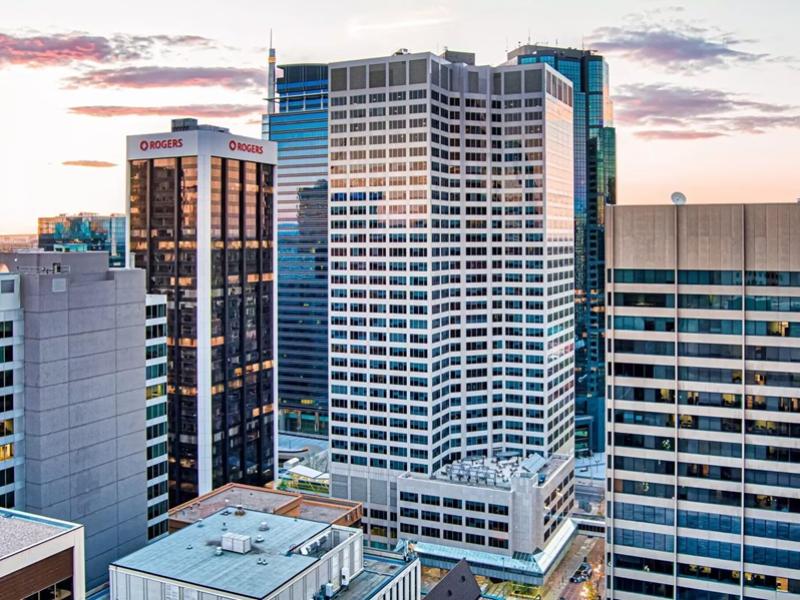




As Canada's climate changes, CRE owners are beginning to rethink the assumptions behind their buildings.
The summer air is alive with the sound of cicadas. The sun hangs high, relentless and unfiltered, warming rooftops, pavements and everything in between.
Days like these make it easy to forget how quickly conditions can change. Not long ago, much of Canada was digging out from record breaking snowfalls. Before that communities were dealing with flooding, and today parts of Canada are experiencing wildfires and smoke.
The seasons have always changed, but increasingly, it feels like each one brings a new reminder that yesterday's expectations don't always match today’s realities. The same challenge is emerging for commercial real estate.
Buildings designed around historical weather assumptions are being asked to perform in conditions that those assumptions may not have anticipated.
When buildings outlast their design assumptions
Most buildings are designed to last for decades, however the assumptions behind them rarely do. When a building is constructed, it’s designed using the best information at the time. Historical weather patterns, rainfall intensities, flood plan mapping and infrastructure capacity all influence decisions about drainage systems, roof design, mechanical equipment placement and building operations. Buildings don’t change nearly as quickly as the world around them.
This gap between assumptions and reality is changing the conversation around resilience. It's no longer only about recovering after a disruptive event. It's about understanding how a building will perform as the surrounding environment shifts.
For years, risk was largely viewed through a financial lens. Owners worried about interest rates, leasing, operating costs and deferred maintenance. Those risks remain; what's changing is the recognition that physical risk deserves the same level of attention.
That includes understanding how a property may respond to flooding, extreme heat, aging infrastructure and other conditions that could affect its long-term performance and operational continuity. Traditional due diligence does an excellent job of telling buyers what a building is today.
Building condition assessments, environmental assessments and building inspections all provide valuable insight into an asset's current location.
However, investors also need to understand how that asset is likely to perform over the next 20 or 30 years.
From recovery to resilience
Resilience is reflected in where critical systems are located. A backup generator installed above grade may be far less vulnerable during a flood than one located in a below-grade mechanical room.
An electrical room on an upper floor may recover more quickly from a severe weather event than one positioned in a basement.
It also shows up in capital projects that are deferred or accelerated. It influences whether a roof replacement becomes simply another maintenance project or an opportunity to improve drainage to protect the building for decades to come.
A building can be structurally sound, well maintained and free of significant deferred maintenance while still carrying vulnerabilities that influence ownership.
Understanding those vulnerabilities requires looking beyond the building itself. By combining a property's historic information with regional climate data, building characteristics and owner objectives, resilience assessments provide a more complete picture of how an asset is expected to perform over time.
An assessment may identify a property with rooftop equipment vulnerable to high winds, a loading area susceptible to overland flooring, or cooling systems may struggle during prolonged heat events.
The result is a prioritized roadmap of resilience measures that can be incorporated into future capital planning, helping owners align investments with both their risk tolerance and long-term ownership strategy.
Building resilience through capital planning
Not every vulnerability needs to be addressed immediately and not every resilience improvement requires a standalone project. In many cases, resilience measures can be incorporated into work already planned as part of normal capital renewal cycles.
A mechanical upgrade may present an opportunity to relocate critical equipment. A building envelope rehabilitation may improve protection against increasingly severe weather.
A drainage improvement may strengthen the property's ability to recover from future storms.
The insurance advantage
The insurance market is evolving in much the same way. Insurers are increasingly interested in understanding a property's exposure to physical risk and the measures owners have taken to manage those risks.
Owners who understand their property's vulnerabilities and document resilience improvements are better equipped to have informed underwriting discussions. In the absence of property-specific resilience data, underwriting decisions often rely on regional hazard maps and generalized assumptions.
Detailed resilience assessments allow owners to demonstrate the measures already in place to reduce risk, helping insurers evaluate the asset based on its actual characteristics rather than its postal code.
The value isn't simply another report but rather providing insurers with the opportunity to consider reduced premiums that are in line with a more complete picture of the risk profile.
A practical example
A recent client engagement demonstrated just how valuable that additional context can be.
Working with the owner of a large hospitality property, Partner expanded the traditional due diligence process by collecting detailed information on the building’s construction, roof systems, building envelope and other resilience-related features that were not typically captured through a standard property assessment.
By combining site observations with document reviews and historical building information, Partner developed a more complete understanding of the property’s physical risk profile.
That enhanced level of detail provided the insurer with greater confidence in evaluating the asset, helping streamline the underwriting process and ultimately support more favourable insurance terms.
Preparing buildings for tomorrow
It is easy to forget how quickly conditions can change. A hot summer afternoon has a way of making winter feel like a distant memory, just as a quiet season can make us forget the last major storm.
Buildings, however, don’t have that luxury. They carry the decisions made years, sometimes decades earlier, into a future that rarely unfolds exactly as expected.
Quietly, season after season, they continue doing exactly what they were designed to do, even as the world around them asks them to do something different.
For owners and investors, the challenge is no longer the simple maintenance of a building. It is ensuring those buildings remain capable of preforming as expected in a future that may look very different from the past.
Perhaps resilience is not about preparing for the unexpected. It is about accepting that yesterday’s expectations will not always survive tomorrow’s realities


 Industry Events
 Locations