


 Locations





Design trends now cross continents in a scroll, and new mixed-use projects are starting to look interchangeable. When tenants can’t tell buildings apart, they compare rents. Placemaking builds the difference a competitor can’t pin to a mood board.
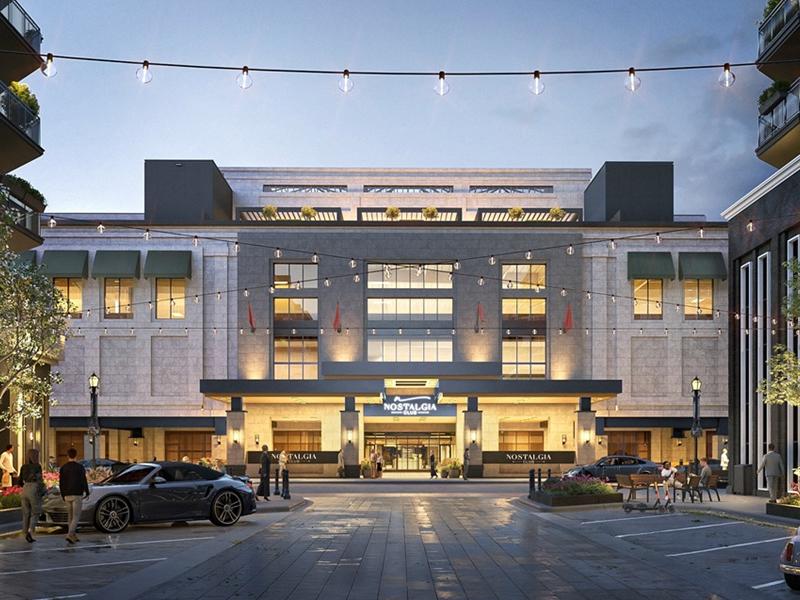
Tour three new mixed-use projects in any Canadian city and you can predict the fourth. Pale oak and fluted panels in the lobby. A quartz island, a co-working lounge, a roof terrace. At grade, an active ground floor and a plaza with movable chairs. Each feature answers a real market expectation. Together, they describe a building that could be moved to another city without anyone noticing.
Blame the tools as much as the designers. Design trends have never been easier to copy and paste.
A lobby photographed in Copenhagen can reach every developer’s Pinterest board within a season. Writer Kyle Chayka named the result AirSpace back in 2016: the minimal furniture, reclaimed wood and industrial lighting that make cafés, offices and co-living spaces feel the same wherever you are. A study published this year in City, Culture and Society tested the idea on independent coffee shops in the U.S. and Canada. Shown interiors from three cities, only 10 per cent of respondents correctly placed both Toronto shops.
Real estate is repeating the pattern at the scale of whole districts. The plaza with movable chairs is now standard; a plaza with something happening in it every week is still rare. That gap is where placemaking earns its place in an asset strategy. Public art, murals, recurring programming and local operators are the parts of a project a competitor can’t lift from a mood board, and they give prospective tenants a reason to choose one building over the one two stops away.
Hotels learned this first
Hospitality went through the same cycle a generation earlier. Through the 1990s and early 2000s, global chains sold consistency: the same room, the same breakfast and the same comfort whether a guest woke up in Frankfurt or Singapore. For a traveller in an unfamiliar city, predictability was the product.
Once every brand offered it, consistency stopped being a reason to choose. Guests who could count on a good bed anywhere began asking what made this hotel worth the booking, and they wanted to feel they had arrived somewhere.
Brands responded by making the destination part of the offer. IHG built its Hotel Indigo brand around neighbourhood-inspired design and local creators. In 2014, IHG research involving more than 7,000 international travellers found guests still trusted global brands for consistency but increasingly expected an experience rooted in the place. Two years later, Airbnb built its largest brand campaign to date around two words: Live There.
People choosing where to live now shop the same way. A prospective resident touring three buildings wants to know, quickly, what life there will feel like: who runs the café downstairs, what happens in the plaza on a Saturday, whether the place has a character worth belonging to. A minimalist lobby tells them the finishes are good. It says nothing about the life outside the elevator.
In a soft market, sameness costs money
Rental housing gives a current example. Across the Greater Toronto and Hamilton Area, two months of free rent was the most common incentive at new purpose-built rentals in the first quarter of 2026, offered at 47 per cent of projects, according to Urbanation. By the second quarter some form of incentive was on the table at 64 per cent, and net rents averaged $3.51 per square foot against face rents of $4.05.
Most of that is supply and demand, and it proves nothing about design. What it does show is the setting in which sameness starts to cost money: renters have plenty of similar options, price is the quickest lever to pull, and most buildings are pulling it.
Substitution risk: when any building will do
Real estate has working vocabulary for location risk, construction risk and lease-up risk. It has no clean term for the chance that a project could be swapped for a comparable one without anyone much minding.
Call it substitution risk: the likelihood that a tenant, resident or visitor can get substantially the same experience somewhere else, for less money or less effort.
More amenities won’t reduce it. Amenities are the easiest part of a project to copy; a competitor can match a roof terrace in the next pro forma. What resists substitution is identity.
Public art people use to give directions, a program calendar residents plan their week around, local operators and cultural tenants that make a place recognizable: these turn livability from a brochure promise into everyday conditions. They also make an address memorable enough that the cheaper building down the street stops being a like-for-like alternative.
What to watch
Substitution risk rarely appears as a line in the pro forma, but its signals already sit in most asset managers’ reports, usually read one at a time. Start with concessions against the comparable set: a building that needs a richer package to reach the same occupancy is being told something.
Add vacancy duration on second-generation retail units, renewals lost to a cheaper centre with similar sales, tenant sales per square foot and repeat visitation (mobile location data helps with the last, though quality varies by provider).
Read together over a few years, these indicators show whether an asset is becoming easier to substitute. They also test whether placemaking is doing commercial work: compare repeat visits in programmed and unprogrammed zones, and look for behaviour that holds after the opening campaign.
For projects still on paper there’s a cruder test. Strip the logo and street names off the renderings and show them to someone who knows the region. If they can’t place the city, that doesn’t prove leasing risk. It does force the team to name what, exactly, a project nearby couldn’t reproduce.
A repositioning in Brossard
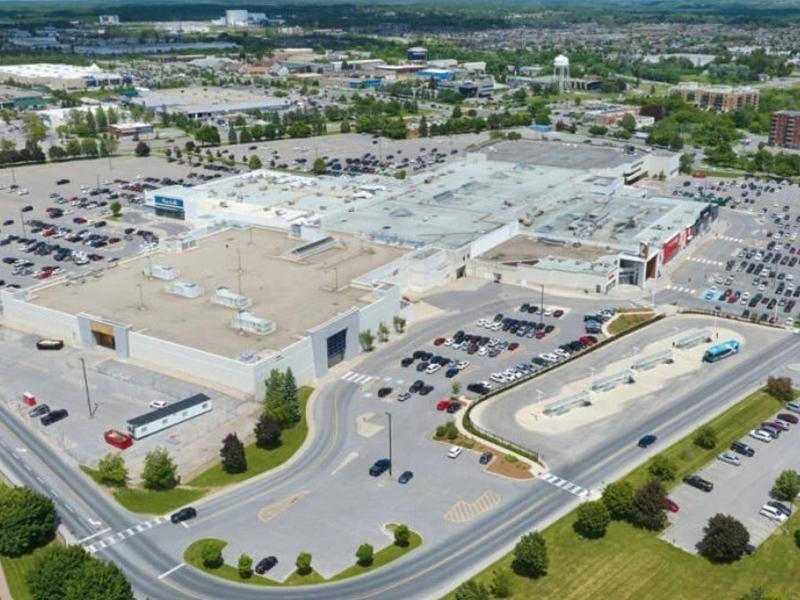
Quartier DIX30 opened in 2006, bringing a downtown-style retail environment to the South Shore, ringed by close to 10,000 parking spaces. Traffic was never the problem; Carbonleo reports more than 30 million visits a year. The repositioning addressed a different question: could the site turn that traffic into a stronger pedestrian centre?
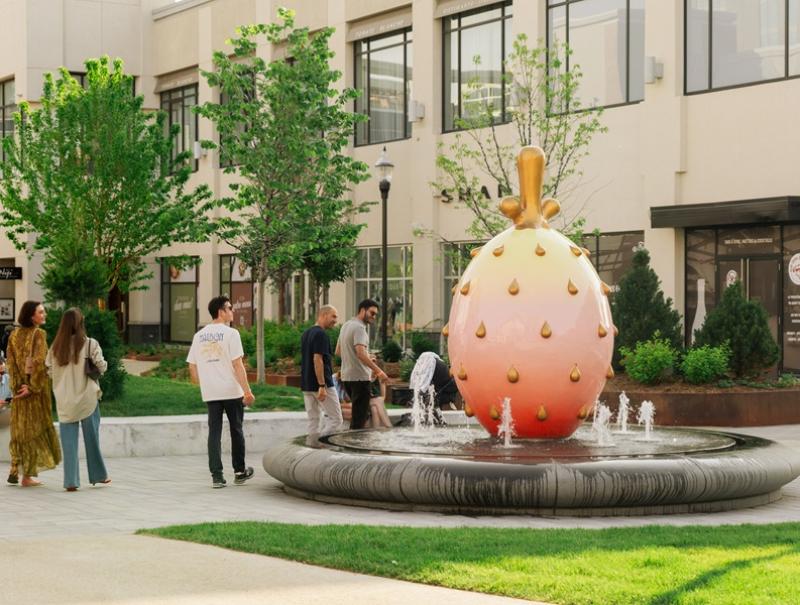
Carbonleo spent about $20 million taking cars off Avenue des Lumières and turning it into 120,000 square feet of linear park with 250 trees. The physical retrofit was paired with a public-art program: murals and sculptures create landmarks along the pedestrian route. Weekly live music, salsa, country dancing, yoga and family programming gave the space recurring uses.
Carbonleo reports more than 1.1 million visits in the nine months after the June 2025 reopening, winter included. The early figure has no published before-and-after comparison, so it says little about returns.
Trees, murals and events do not automatically create value. Together, the public realm, art program and recurring operations gave the corridor an identity of its own and a reason to come back. A nearby development could imitate the look; reproducing the operator relationships, program cadence and public habits would take far longer.
How placemaking builds defensibility
Timing changes the levers available. In a new project, early placemaking can shape plaza proportions, servicing, tenant spaces and the operating budget.
Existing assets can still reposition through public-realm retrofits, public art, local partnerships and recurring programming, as DIX30 shows. Either way, the work needs an owner after opening, someone responsible for curation, maintenance, programming and measurement.
Placemaking reduces substitution risk when it produces uses, relationships and routines tied to one site, and any financial value should surface in the operating record. For now, substitution risk belongs in asset management reporting. That record will decide whether it ever earns a standalone underwriting assumption.
The copy-paste lobby isn’t going away; the tools that spread it get faster every year. Owners can’t stop a competitor from copying their finishes. They can make sure the finishes aren’t the only thing on offer.





 Industry Events
 Locations

