


 Locations



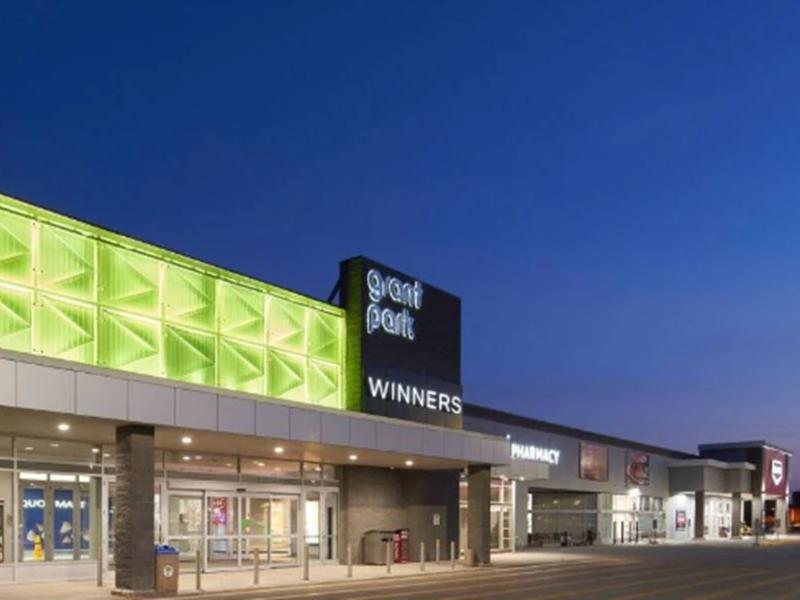




Private investors have overtaken institutions, many of which are now in capital recycling mode and selling off assets, as the leading source of equity capital in Canadian commercial real estate in recent years.
An Oct. 28 webinar led by JLL senior director of research and strategy for Canada Scott Figler — with insider input from colleagues in three of the country’s largest markets — looked at investment in different asset classes in the past, the present and into the future.
“Investment volumes are growing year over year and we're probably on pace for the best year since 2023,” said Figler.
“We're seeing enormous growth in alternative assets, mostly seniors housing and data centres. There’s a lot of momentum in that space, which is very supply-constrained, but has huge demand right now.”
The majority of the discussions, however, centred on the more traditional asset classes.
Land
Land sales have plummeted since the highs of 2021 and 2022, though there could be a slight increase this year over 2025 with a stronger fourth quarter since prices have come down. In an average year, 60 per cent of land sales are residential, 30 per cent are industrial, and other asset classes take up the remainder, according to Figler.
There are few residential land buyers in the Greater Toronto Area, according to Toronto-based executive vice-president of capital markets Bryce Gibson, despite what he called “generational opportunities to buy fantastic sites” at prices that are at about one-third of peak value.
“Most developers still have a pretty significant pipeline of projects or land holdings that they can't put into production because sales aren't there, or maybe their acquisition base price just doesn't allow them to do it because prices have fallen off,” he said.
Investors continue to look for plays where land has future development potential but they can make a decent return on existing revenue-producing buildings during the hold period.
There’s been renewed interest from private and institutional investors in land to build new industrial facilities.
Office
Most major markets are seeing office vacancy declining as leasing activity strengthens and new supply remains essentially frozen. Halifax, in fact, had the lowest office vacancy rate in North America at 10.6 per cent in the third quarter of this year.
“If there's no new supply, demand is spilling into existing buildings — maybe not in the top tier, but in the next tier down — and that's chipping away at the vacancy rate,” said Figler.
Montreal’s third-quarter office vacancy rate was 18.1 per cent, a number that’s been dropping due to back to office mandates implemented by employers. Buildings in the central business district, particularly those connected to the 33-kilometre underground pedestrian network, have benefitted the most.
Class-A properties are 98 per cent occupied and that’s having a positive trickle-down impact on class-B properties, according to Montreal-based executive vice-president of capital markets Jacob Hayon.
While Calgary had an overall third-quarter office vacancy rate of 25 per cent, Calgary-based vice-president of capital markets Ryan Murphy said it’s materially lower in the centre core and rents there are starting to rise.
Calgary had an oversupply of office buildings, with a lot of institutional owners believing they were too heavily allocated looking to sell. Entrepreneurial private capital has stepped in to purchase these properties, “in many cases at sub-$100 per square foot and at going-in yields in excess of 10 per cent,” according to Murphy.
Toronto’s financial core, where many of its trophy office buildings are located, has seen its vacancy rate drop from close to 20 per cent two years ago to around 12 per cent in the most recent quarter. Downtown west, downtown east and Bloor Street have seen the biggest drops in availability.
“There’s some bifurcation between older product and some of the newer build stuff, but I think suburban investment opportunities for private capital are really good right now,” said Gibson. “There are little to no institutional bids, even for best-in-class suburban office.”
Industrial
Industrial leasing activity is on pace for its best year since 2021, when there was a big demand for fulfillment centres, as American tariffs haven’t had as large an impact as many expected. Vacancy is falling across all major markets as demand recovers and new deliveries slow.
Calgary is one of the tightest industrial markets in North America, with a 1.8 per cent vacancy rate in the third quarter, which caused average rents to rise to $11.95 per square foot amidst growing demand. That’s significantly lower than the $18.79 average rent in Vancouver, where it’s drawing tenants from.
“Not only are we significantly cheaper, but we have the land available to service, sub-divide and sell to investors, developers and owner-users,” said Murphy.
“Our only challenge is finding willing vendors because the underlying assets are performing so well. Many owners are content to hold and take advantage of this very compelling rising market.”
Montreal had Canada’s highest major market vacancy rate at 7.8 per cent even though investment volumes are up.
Hayon said there was a post-COVID-19 speculation building boom, which resulted in oversupply and some older facilities that were no longer as attractive becoming empty and often being repositioned as multifamily redevelopment opportunities.
Retail
Grocery-anchored retail, power centres and non-grocery-anchored strip malls all have vacancy rates in the two per cent range and are expected to stay there for the next couple of years due to a lack of new supply.
“Grocery-anchored retail anywhere in Canada is incredibly sought after and very deep capital sources chase it, which makes it a very competitive landscape,” said Murphy. “I think there's quite a bit of opportunity, at least within Calgary, for assets that may be shadow-anchored or not quite a fit for institutions.”
“For private investors, retail is one of the best asset classes to create value,” added Hayon. “You can be sitting on a big piece of land that could potentially be redeveloped depending on zoning.
“We've done a lot of those type of deals where there’s some rent growth since a lot of these tenants have been locked in for a very long term and they're coming to an expiry. So there's an opportunity to bring back mark to market on the rents.”
Multifamily
Even as multifamily rents flatline in most markets, investment volumes are on pace for the second best year on record.
Purpose-built rental construction is surging in Calgary, Edmonton and Montreal, while Vancouver and Toronto are seeing the pace of new construction fall — setting up a supply crunch in a few years.
“There’s very strong interest in the multifamily sector from investors,” Murphy said of Calgary. “That said, underwriting is now paramount because we've had this significant run-up in supply, pushing 10,000 units last year.
“It's now questioning what the rent roll looks like year over year, what the turnover may be, and taking into account free rent periods on a lot of new builds.”
Montreal is the biggest rental market in Canada, with more than 650,000 such dwellings. New construction deriving from tenants demanding more modern amenities, on top of the existing inventory built in the 1960s, has caused an oversupply.
It’s expected to be absorbed, however, and there are good opportunities for private investors to take advantage of Canada Mortgage and Housing Corporation financing to buy and reposition older properties for higher rents as immigration is expected to increase again.
“There are a lot of opportunities for private capital to invest directly side-by-side with good developers to try and move quality projects forward,” Gibson suggested. “There's development risk, but you may get paid for it in the end.”



 Industry Events
 Locations

