Locations





U.S. president Donald Trump’s self-proclaimed “Liberation Day,” when he announced a broad range of tariffs to be imposed on countries around the world on April 2, 2025, changed the way some foreign investors looked at the country.
But as one of the world’s two largest real estate markets, it’s too important to ignore, many investors agree. A panel discussion as part of the Dec. 2 Global Property Market conference at Toronto’s Fairmont Royal York looked at today's challenges, risks and opportunities of investing in U.S. real estate.
The session was moderated by Steve Guberer, special counsel for Grosvenor Property Americas. His company develops, manages and invests in residential, office, retail and industrial assets in and around San Francisco, Washington, D.C., Seattle and Los Angeles, and Vancouver in Canada.
“We talked to investors in close to 20 countries this year, institutional investors across the spectrum, and I think there are definitely some who felt a little bit of a chill towards investing in the U.S.,” said John Worth, executive vice-president of research for the Washington, D.C.-based National Association of Real Estate Investment Trusts, which serves as the worldwide representative voice for REITs and real estate companies with interests in U.S. real estate.
Long-term investment outlook
Shawn Lese, chief investment officer and head of funds management for Nuveen Real Estate — one of the largest investment managers in the world, with US$142 billion of assets under management throughout the U.S., Europe and the Asia Pacific region — said anti-U.S. investment sentiment was very strong for the first three months after “Liberation Day” but has now returned to where it was at the beginning of the year.
Perhaps not surprisingly, Lese said anti-U.S. sentiment was strongest in Canada.
The Canada Post Corporation Registered Pension Plan (CPCRPP) was looking to diversify its portfolio outside of Canada and the U.S. offered the best risk-adjusted returns. It initially held back before deciding to keep moving forward because of the opportunities presented by the large, resilient and entrepreneurial market.
“You have to look at it from a long-term perspective,” CPCRPP general manager of real estate investments and pension fund Marie-Josée Turmel explained. “We’re a long-term investor and we're looking to invest in core and core-plus product that should perform for a while.”
Regional investing in the U.S.
CPCRPP is making its U.S. investment decisions based more on demographic trends, opportunities and asset classes than markets. But it has found many of those opportunities in Texas and Florida, where populations are growing.
Amsterdam-headquartered Bouwinvest has 35 institutional clients and had €16.8 billion worth of assets under management globally at the end of June. Director of North American investments Robert Wagenaar is moving to New York City in a few weeks and is cautious about investing in the U.S. Sun Belt due to climate risks, particularly in Florida.
Lese said Nuveen was focused on the Sun Belt until about five years ago when it saw so many building permits being issued that it thought it was time to concentrate elsewhere. It has turned its attention to middle America cities including Columbus, Chicago and Minneapolis, where there was a lack of new supply, pricing was decent and rents have been accelerating.
There has also been a lot of recent strength in U.S. gateway markets across the multifamily, retail and office sectors, according to Lese.
Seniors living, medical office are attractive
REITs in asset classes outside of the core four account for 60 per cent of the total REIT market cap in the U.S., according to Worth.
“That sea change is taking place in the public markets and I think institutional investors are understanding that they've got to modernize their real estate and are moving quickly to do that by using every tool available,” Worth observed.
He said the best-performing REIT sector in the U.S. this year has been specialized healthcare, as there was little new construction during the COVID-19 pandemic and in the first few years coming out of it. Thus, supply did not keep up with demand.
Toledo, Ohio-based Welltower — which has a portfolio of over 2,000 seniors and wellness rental housing communities across the U.S., United Kingdom and Canada — is the largest REIT in the world based on market cap, sitting at around $195 billion.
“A lot of investors are recognizing the benefits of both senior living and medical office buildings,” Lese said. “There's a shortage of both.”
Lese noted a lot of baby boomers have saved significant amounts of money and can afford to pay $12,000 per month for high-end accommodation and services, since they only spend an average of four years in them.
There’s not a lot of speculative development of specialized medical office facilities, and many are built to suit the needs and specifications of the occupiers. Lese said that de-risks the development process and can generate long-term leases with 2.5 per cent annual rent increases.
Other alternative asset classes
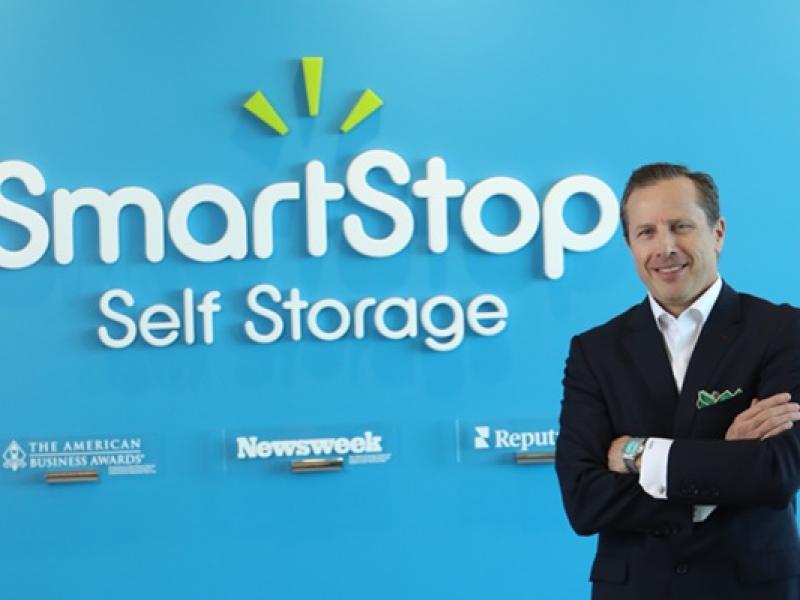
Turmel said she likes self-storage facilities.
Worth said there’s a new data centre REIT in the U.S. that focuses exclusively on development, and it has attracted a lot of investor interest.
Wagenaar said Bouwinvest has invested in student housing in other markets but is unsure about its pricing in the U.S., so it has held off there to this point. He added that the life sciences sector in the U.S. has softened.



 Industry Events
 Locations