
 Locations






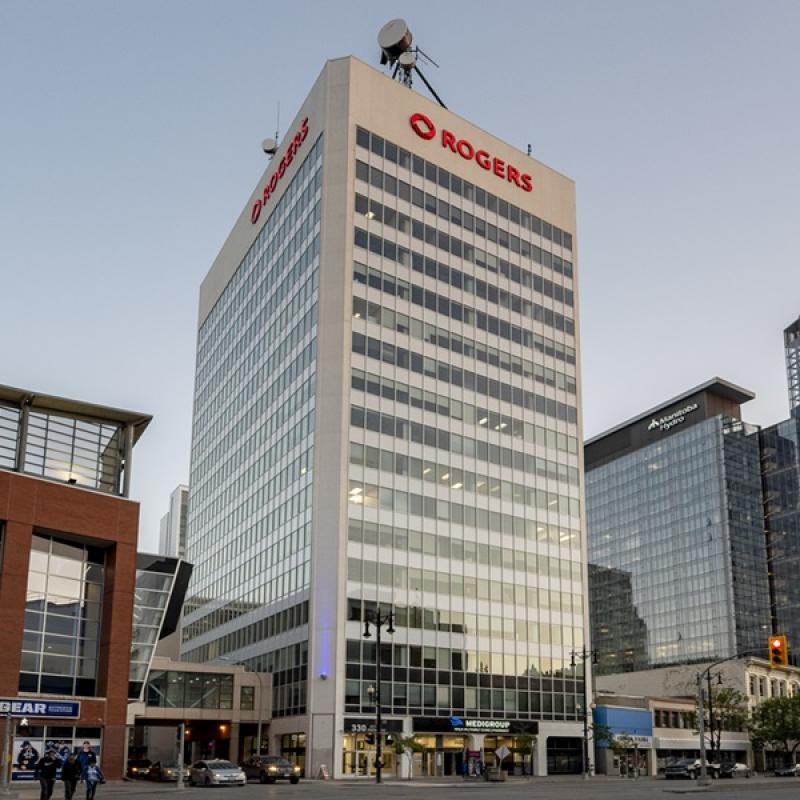
A key downtown Winnipeg office tower is nearly fully leased due, in part, to strategic renovations and a dedicated approach to leasing in an otherwise challenging market, say the brokers behind 330 Portage Avenue.
The success of the 56-year-old building bucks a national and local trend of sluggish office leasing for older buildings and showcases the value of retrofit investments, say Taylor Toni and Cliff Dyck, commercial brokers with the Dyck Toni Team at RE/MAX in Winnipeg. They have been working to lease the 150,000-square-foot building that’s connected to Canada Life Centre, home of the Winnipeg Jets.
KingSett Capital purchased the 18-storey office tower in 2017 with Corpfin Capital.
Ashley Wedlock, vice-president, office with KingSett told RENX the partners invested $9.5 million in capital upgrades since then.
“Major improvements include new curtain walls throughout, lobby entrance renovations, HVAC and generator replacements as well as washroom and elevator lobby upgrades,” Wedlock said in an email. “These renovations, along with the property’s high-exposure location, have positioned it as one the best class-B office buildings in downtown Winnipeg.”
The upgrades also involved installing heat pumps on each floor and replacing elevator cabs. "There was... quite a bit of capital deferred maintenance that needed to happen," Toni said.
Building had been underperforming
Toni said the building’s spot on Portage Ave. is a prestigious and prominent location, making it an important part of the downtown market. Prior to the upgrades, the aging building was under-leased and underperforming in its class.
Overall, the building has been elevated in class to B-plus, Toni said.
The building is now nearly 100 per cent leased after plenty of effort by the leasing team that required lengthy lead times, extensive communication with tenants and the owners, and flexible lease negotiations, Dyck said, calling the process “intensive transaction management.”
Shared Health, the provincial health authority, took an additional 2.5 floors in addition to its three existing floors. The health authority consolidated multiple office locations in the city to 330 Portage. "That's happening now," Toni said.
All that remains is a 300-square-foot retail space located in the building lobby, ideal for a coffee shop.
"It's a 151,000-square-foot building, and every single square foot of office is leased, and the majority of the retail is leased amongst two tenants," Toni said, noting a medical group and a pharmacy.
Shared Health now occupies 50,000 square feet. Among the other building tenants are: Baker Tilly accountants, Manitoba Hydro Electric Board, Rogers, the Public Utilities Board and the Office of the Auditor General.
Dyck said KingSett recognized the necessity of investing in the building to bring it online with what companies needed in the marketplace. The leasing process "was just driven towards creating good optics for potential tenants. So you didn't have to sell the vision."
The process to lease the space also included flexibility on tenant improvement allowances.
Office vacancy elevated, but organic demand rises
The Winnipeg office market showed encouraging signs this quarter, with approximately 53,000 square feet of space absorbed, according to Colliers' 2025 Q3 Winnipeg office market report. It said organic growth is the main driver, with the latest absorption data suggesting Winnipeg is on a path for positive growth this year.
The vacancy rate has dropped for most asset types with class-A buildings leading the market, the report said, putting total downtown office vacancy at 16 per cent.
“It is encouraging to see that the downtown market is keeping pace, though tenant inducement packages have greatly contributed to this fact,” Colliers said in the report.
Toni said office leasing in the Winnipeg market is generally improving. "Tenants are in the market; they're looking for spaces."
Finished space is seeing much more success and leasing compared to shell space, she said.
Construction costs are high so if a tenant is relocating, it tends to be for a good reason such as having too much space or too little, Toni said. "The winning landlords… are the ones who can provide a flight to quality or have space for their tenants to grow within."
In some cases, that means either having functional, complete spaces that don't require pricy build-outs, or meeting tenants half-way with their construction costs to tailor their offices.
She said available parking is also a key with tenants. "Beyond that, landlords are having to invest big dollars into lobby renovations, tenant improvement allowances (and) pre-rent periods.”
With 15-20 other buildings with similar blocks of space available in the market, tenants will probably pick the space that comes with a tenant improvement allowance, and other things on the wish list, Toni said. That means landlords which have the foresight to invest to improve their shared spaces, lobby areas and other amenities will likely end up with lower vacancy and enjoy more demand long-term.


 Industry Events
 Locations