
 Locations






Alliance REIT announced the launch of an acquisition initiative to expand its portfolio of "missing middle" housing across Toronto — an increasingly vital and undersupplied segment of the city's residential market — in late April.
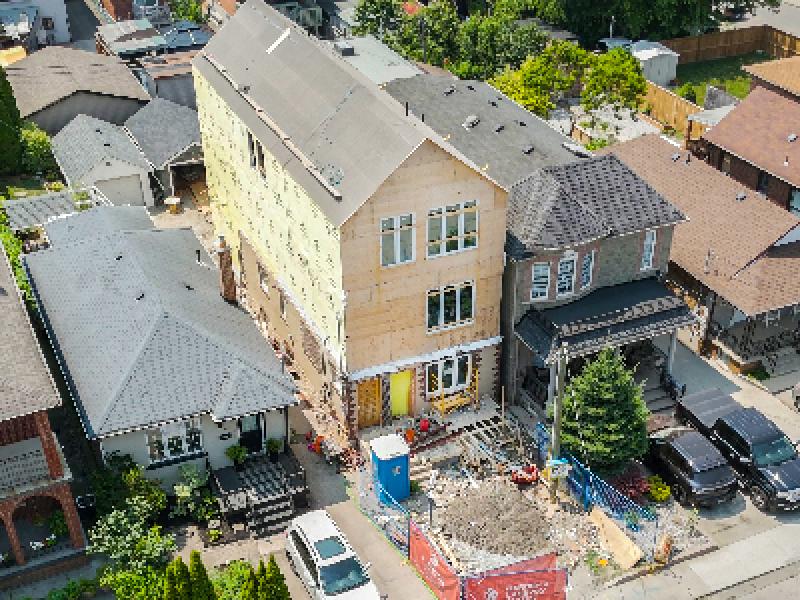
The Toronto-based, open-ended private real estate investment trust creates housing by acquiring underutilized properties, such as older single-family or mixed-use buildings, and transforming them into boutique multi-unit buildings.
Alliance has converted more than 30 Toronto properties over the past decade-plus into hundreds of units and manages them all at near full occupancy while compiling a waiting list of new residents interested in moving in. Most of its buildings have four to eight units.
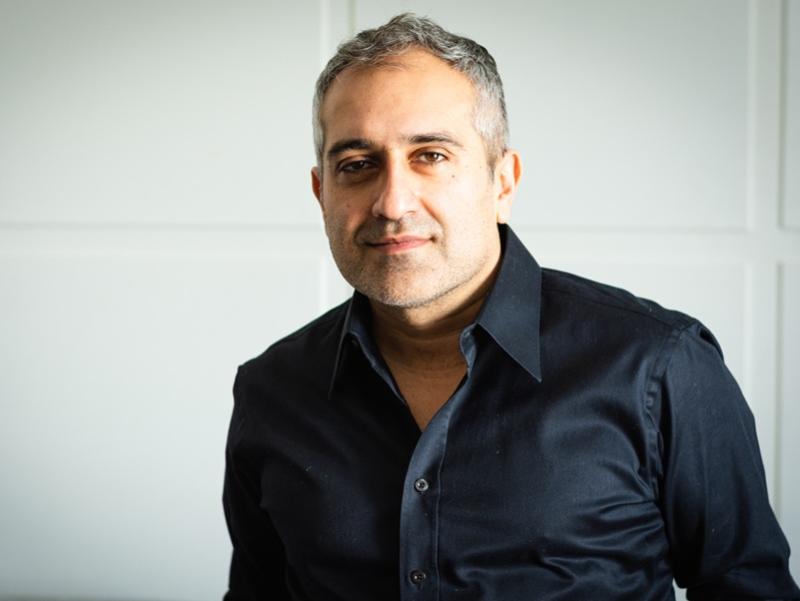
“Along the way, we've built the operating infrastructure around those assets — acquisitions, design, construction, leasing and property management,” Alliance chief executive officer Hooman Tabesh wrote in response to questions from RENX.
“We see Alliance as a specialized urban residential platform capable of aggregating, improving and professionally operating a highly fragmented segment of Toronto's rental market. Importantly, it is a segment concentrated in some of Toronto's most desirable and supply-constrained neighbourhoods — places where people have wanted to live through very different real estate cycles.”
Location is key
Alliance tries to preserve as much of the character of its buildings as possible while completely rethinking the interiors. Tabesh said the result is layouts and finishes that are closer to a boutique condominium experience than a traditional rental apartment.
“But ultimately, the most important characteristic of our portfolio is location,” wrote Tabesh. “These are properties in established neighbourhoods with transit, restaurants, retail, schools and community already around them.”
Alliance’s portfolio has been particularly concentrated in the area roughly from Bloor Street north toward St. Clair Avenue and from Spadina Avenue west toward Weston Road, although it will look outside those boundaries for the right opportunity.
Another valuable component of the portfolio is the land itself. Many properties are located on sites that Alliance believes will accommodate greater future density as Toronto continues to grow.
“The multiplex may be the best use today, while 10 or 20 years from now a particular site may support something significantly larger,” wrote Tabesh. “That gives us income-producing real estate today with embedded development optionality for the future.”
Acquisition strategy
Ownership of Alliance’s target properties is highly fragmented, often among individuals and families, and institutional capital has traditionally had difficulty participating because the individual assets are too small. The trust therefore sees a significant opportunity to aggregate that real estate on to a professionally managed platform.
“We aren't interested in aggregating small buildings simply because they are available,” wrote Tabesh. “We want high-quality, difficult-to-replicate real estate in neighbourhoods where people have demonstrated they want to live over generations.”
Alliance launched its April acquisition initiative because it’s now seeing opportunities that weren’t available several years ago. Financing costs have increased, transaction volumes have declined and a number of traditional buyers have stepped away.
“The initiative has generated conversations with individual property owners, brokers and owners of larger portfolios,” wrote Tabesh. “The objective isn't to announce a certain number of acquisitions; it's to deploy capital where we believe the long-term economics are compelling.
“One interesting development is that not every owner wants to sell and walk away. Some have owned Toronto real estate for decades and want to continue participating in its long-term value without the day-to-day responsibility of owning and managing individual buildings.
“We think Alliance can increasingly provide a solution for those owners as well.”
Alliance’s investors and balance sheet
Alliance’s investor base includes individual accredited investors, high-net-worth investors, family offices and investors who hold Alliance through registered retirement savings plans and tax-free savings accounts. The trust makes distributions from the cash flow generated by the portfolio while also creating value within its assets.
Alliance's overall leverage sits at around 54 per cent. The underlying portfolio continues to perform well operationally, with high occupancy and growing property-level income.
“Real estate values don't move in a straight line,” wrote Tabesh. “Cap rates, interest rates and market conditions affect valuations even when the underlying properties are performing well.
“So we don't promise a particular annual return. Our historical year-over-year average growth in value since inception has been in the double digits annually, but past performance isn't an indication of future performance.”
Municipal housing policies and rent controls
Tabesh said the City of Toronto, over the past few years, has moved toward permitting more gentle density in established neighbourhoods. This includes multiplexes and, in parts of the city, five- and six-unit buildings.
“The challenge now is execution,” wrote Tabesh. “Zoning permission alone doesn't create housing.
“Projects still have to work economically, permits have to move efficiently, financing has to be available and construction costs have to make sense.”
Over the longer term, Alliance expects Toronto to continue evolving toward greater density around transit and established urban neighbourhoods.
Alliance operates within Ontario's rent-control framework, but its portfolio has characteristics that differentiate it from a conventional legacy apartment portfolio. Many of its units have been newly created through substantial conversions and additions, so the treatment of individual units depends on when and how they were created and first occupied.
“We don't build our business model around maximizing annual rent increases on existing residents,” wrote Tabesh. “Resident retention is valuable to us.
“Turnover is expensive, and a resident who likes the building and stays for several years is generally good for both the resident and Alliance.”
Toronto’s multifamily housing market
While conceding that the current short-term multifamily real estate cycle has been challenging, Tabesh said Toronto still needs more housing.
“That creates an interesting opportunity for missing middle housing,” he wrote. “We can take an existing building and infrastructure and add several homes without assembling a large development site and constructing a highrise from the ground up.
“It isn't the entire solution to Toronto's housing shortage, but it can be an important part of it.”


 Industry Events
 Locations