


 Locations







Unitholders of InterRent REIT made a premium of 35 per cent while Minto Apartment REIT unitholders received a premium of 32 per cent after they were taken private this summer.
Those holding First Capital REIT units will also make a solid profit when its acquisition by Choice Properties and KingSett Capital closes before the end of the year.
Many Canadian public real estate investment trusts (REITs) continue to trade at a significant discount relative to their underlying net asset value (NAV) per unit, which has prompted these moves to privatization.
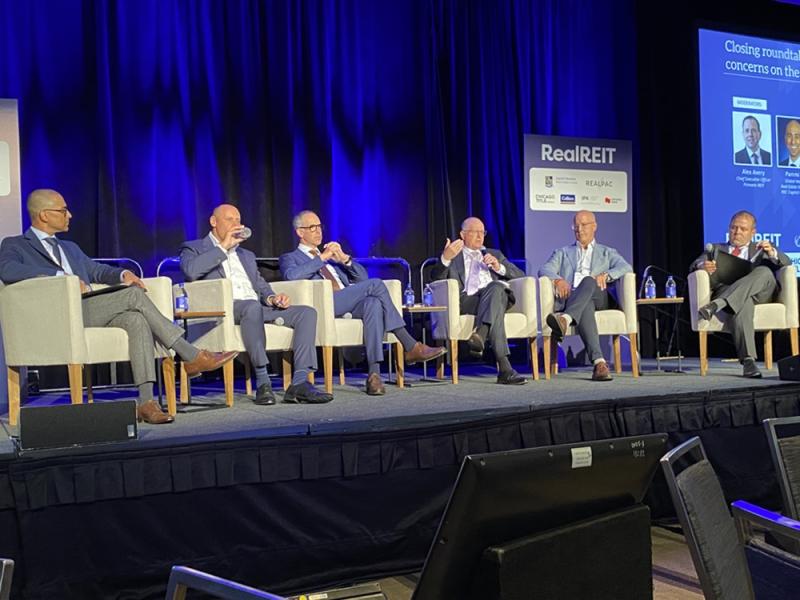
A session at the recent Ottawa Real Estate Forum looked at these deals, examined their context and considered if they’re part of a trend that’s likely to continue.
Aik Aliferis, the executive managing director of investments, Canadian apartment and commercial groups at Institutional Property Advisors, a division of Marcus & Millichap, has been involved with more than $10 billion in transactions in his more than 25 years in the real estate business. He took part in that session and spoke to RENX about the current climate.
This year’s Canadian REIT privatization deals
“The scrutiny of the public markets and the analytics along with it sometimes motivate some of these public REITs to say, if we get a good opportunity to divest, and it's a good opportunity for our unit-holders, they’ll ratify the deal and move forward,” said Aliferis.
“And that's what transpired on the deals that were on the table this year with InterRent, First Capital and Minto.”
InterRent was acquired for approximately $4 billion by Carriage Hill Properties Acquisition Corp., an entity formed by Ottawa-headquartered CLV Group and Singapore sovereign wealth fund GIC.
Crestpoint Real Estate Investments acquired an approximate 50.1-per cent stake while Minto Group acquired the remainder of Minto Apartment REIT in a deal valued at approximately $2.3 billion.
With the First Capital deal, Choice will acquire a portfolio of core necessity-based urban neighbourhood shopping centres, anchored by grocery stores and pharmacies, across major Canadian markets for approximately $5 billion.
KingSett, meanwhile, will acquire the remaining assets — including high-street retail, mixed-use developments, development sites and all of First Capital's issued and outstanding units — for approximately $4.4 billion.
Benefits of taking public REITs private
It’s obviously not just unitholders who see advantages in these deals. Those with the money to make these public REIT acquisitions and take them private, including large global pools of capital as well as Canadian entities, still need compelling reasons to do so.
Buying a whole public entity often gives a much cheaper entry price than buying building by building.
“It just makes more sense to buy the underlying portfolio or platform because there's a cap rate differentiator there,” Aliferis explained.
“You're buying the assets at a cap rate that's lower individually, or you can buy the platform at a higher cap rate and get all the assets included.”
It’s more difficult for public REITs to get accretive deals done these days and, by not being competitive in the market, private investors have been able to dominate acquisition activity for well over a year.
Some REITs are buying back their own shares
It also opens up opportunities for these REITs to become net sellers of assets and use the proceeds to buy back their own units since they’re trading at a discount while their properties still have strong underlying fundamentals.
“We've seen them looking at their portfolios and diagnosing some of their older non-core assets, then taking that capital and putting it right back into their own company because the values are substantially lower in the market,” said Aliferis. “Everybody's trading under NAV right now.”
Aliferis cited Boardwalk chief executive officer Sam Kolias, who moved his extensive multifamily portfolio from a privately owned company into a publicly traded entity on the now-defunct Alberta Stock Exchange as Boardwalk Equities Inc. in 1994, before becoming a REIT trading on the Toronto Stock Exchange 10 years later.
“He's continuing to purge his portfolio a little here and there, and he's clearly acquiring more shares in his own company, which is a big message to the market that you believe in your own company,” said Aliferis.
More public REITs are expected to go private
Aliferis expects some smaller public REITs to be taken private in the next 12 to 18 months, but declined to speculate on which ones could be in play.
“They're definitely an attractive target right now,” he said.
“There are some big groups out there. Are they being approached? I'm sure they are. Are they pursuing it? That's a different question.”
REITs still play a role for retail investors
While big institutional pools of capital are busy carving up and privatizing public portfolios, where does that leave everyday investors?
Public REITs may not be offering the best available returns these days in comparison to other alternatives, but they still play a valuable role in the overall investment landscape.
“The fundamentals that REITs offer to the general public will continue, and I think they’ll continue to grow and be a viable investment opportunity for the retail buyer,” said Aliferis, who pointed out they’re still the best way for small investors to own stakes in grocery-anchored retail, large multifamily or other real estate portfolios.




 Industry Events
 Locations

