Locations







Oxford Properties has added more industrial and multiresidential properties over the past 10 years to what used to be a retail- and office-heavy Canadian portfolio. That more balanced investment approach in its home country has helped it navigate market turbulence and provided a positive outlook for future growth.
“We're looking at a portfolio in Canada that’s a well-diversified one and a really well-performing one,” Oxford senior vice-president and head of Canadian investments Milos Dajic told RENX. “So our strategy is not to radically alter the composition of the assets, because we're quite happy with them.
"It's to drive incremental return and accretion around the edges.”
That doesn't, however, preclude possibly developing another trophy office asset in the coming years.
Though no construction announcement has been made, Oxford is pre-leasing The HUB – a 1.5-million-square-foot, class-AAA, zero carbon-designed office building with retail – at 30 Bay St. in downtown Toronto. It's a property that has long been rumoured as the most likely site of the next major office development in the city after several years of paused launches.
“Looking out a few years, there's going to be a gap in AA and AAA office space,” Dajic said. “If you can find conviction to go in this market right now, I think it'll work out really well so I'm super hopeful we'll be able to find a way to figure that out.”
Re-weighting Oxford's property portfolio
While Dajic doesn't see gaping holes in Oxford’s current portfolio, he’s focused on finding opportunities to potentially re-weight into certain sectors.
“We're trying to increase our industrial exposure, so we've been quite active on the industrial side in trying to uncover opportunities,” Dajic said.
Oxford’s industrial portfolio includes a lot of smaller properties, which Dajic said tend to attract a lot more liquidity than mega-projects. They also provide flexibility during tougher economic times.
“You can trade large parks but you can also trade individual buildings and – when you can trade in individual buildings in smaller snack brackets – the buyer pool is much wider, liquidity is greater and, ultimately, pricing is tighter,” Dajic explained.
Desire to add necessity-based retail
A very specific type of retail property is also of interest.
“We have a strategy we'd like to launch around necessity-based retail,” Dajic said. “We have a big retail footprint and it's been performing really well for us, but it's been enclosed malls with the likes of Yorkdale, Scarborough Town Centre and all the names you would know that have been pillars of our portfolio.
“They've been really strong cash flow-generating assets but we haven't had a lot of, if any, necessity-based, open-air formats in our portfolio. So that's an area that we're actively exploring and excited about.”
Most of these necessity-based retail properties won’t be as large as Oxford’s current malls but, just like with the company’s smaller industrial properties, Dajic is fine with that.
“I don't necessarily look at small cheque sizes as negative,” Dajic said. “If I could get a deal with a ton of scale, that's probably still the preference to achieve scale and minimize transaction costs. But our investments team in Canada is set up to do smaller deals. We've done them and we wouldn't shy away.”
Multifamily growth driven by development
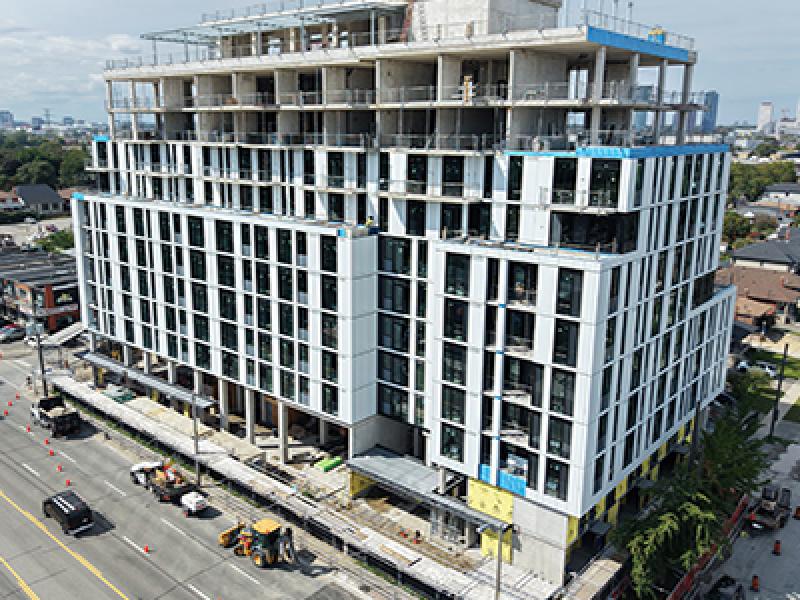
Oxford has started work on Alta, which chief financial officer Liz Murphy called “Toronto's largest single-phase, multi-purpose rental development and the first major rental housing development in Scarborough in over a generation,” at its groundbreaking ceremony last July.
Alta will deliver 1,285 purpose-built apartments and 12,000 square feet of retail space in three towers as part of a larger master-planned community. The project is being built on 3.4 acres of Oxford-owned land at 25 Borough Dr., adjacent to Scarborough Town Centre.
“We have a massive multifamily development platform with several projects around the country that are in various forms of development, whether under construction or in lease-up,” Dajic said. “We're building the residential book through development, but we’ll also selectively be looking at acquisitions where they make sense.”
Office remains important
While more money will probably flow into industrial, retail and multifamily investments, Oxford remains high on the office sector and its exposure in the segment.
Last year Oxford invested $730 million to acquire 100 per cent interests in seven Calgary and Vancouver office towers that it previously shared equal stakes in with CPP Investments.
“The majority of that portfolio is trophy and A-level product, so that was automatically a check mark from a quality perspective,” Dajic said. “The locations, in my mind, are some of the best in the country.
“And these were assets that we were already operating. You have a bit of an advantage when you know what you're buying because you've had significant experience with it.”
With more people returning to offices on a regular basis after working mainly from home through the COVID-19 pandemic, quality office assets are picking up momentum and leasing has been better than Dajic expected.
Citigroup Place is for sale
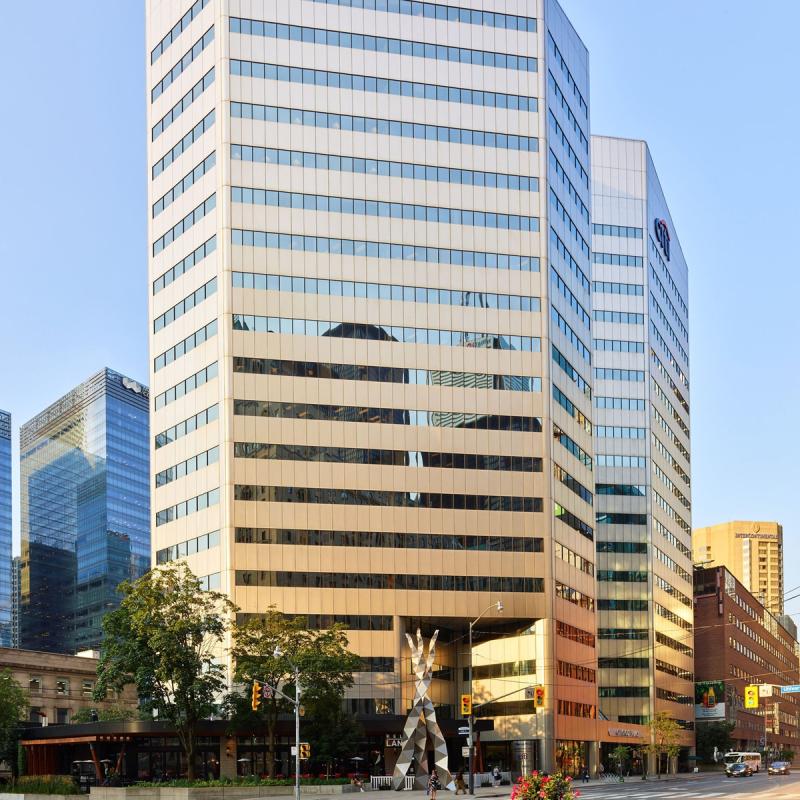
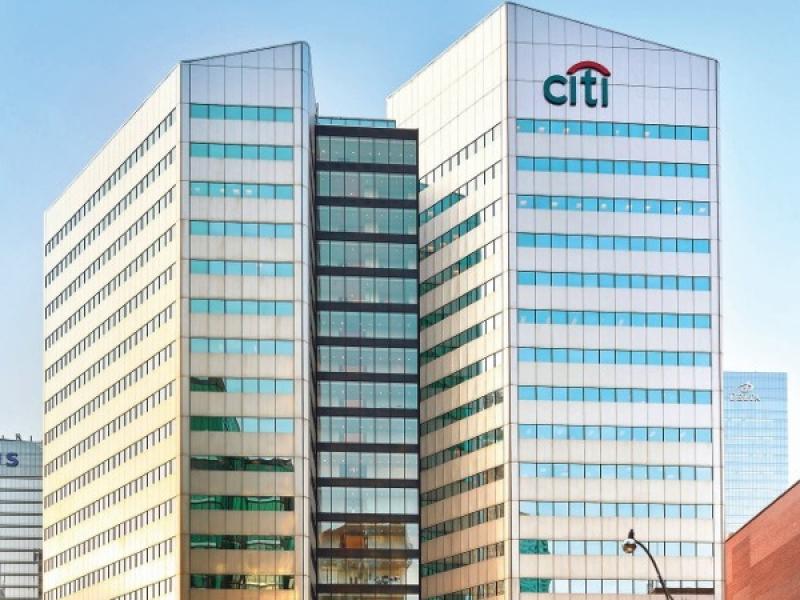
That hasn’t stopped Oxford from putting its 20-storey, 344,393-square-foot Citigroup Place office building at 123 Front St. W. in downtown Toronto up for sale. The 43-year-old class-A building also has approximately 12,000 square feet of ground-oriented retail space.
Oxford is the global real estate arm of the Ontario-based OMERS pension fund, and pension funds generally hold on to assets longer than private equity funds. But that doesn’t preclude them from trying to take advantage of potential disposition opportunities to raise capital.
“That asset is in an amazing location and it's a great, performing asset with great tenants that we've had a lot of operating history with,” Dajic explained. He added that the same can be said for pretty much any property Oxford may sell.
“We're not selling because they're not great assets, we're selling because we have opportunities elsewhere that we want to deploy into in an environment where equity capital for real estate is tougher to come by, given that rates have expanded and a lot of allocations across global funds to real estate have come down a bit.”
Oxford and CT REIT are investing over $200 million to renovate and retrofit Canadian Tire Corp.’s head office in the Canada Square complex in midtown Toronto. The two office towers at 2180 and 2200 Yonge St. will be retrofitted to deliver 680,000 square feet of office space, with more than 80 per cent of it leased to Canadian Tire for 20 years.


 Industry Events
 Locations