
 Locations


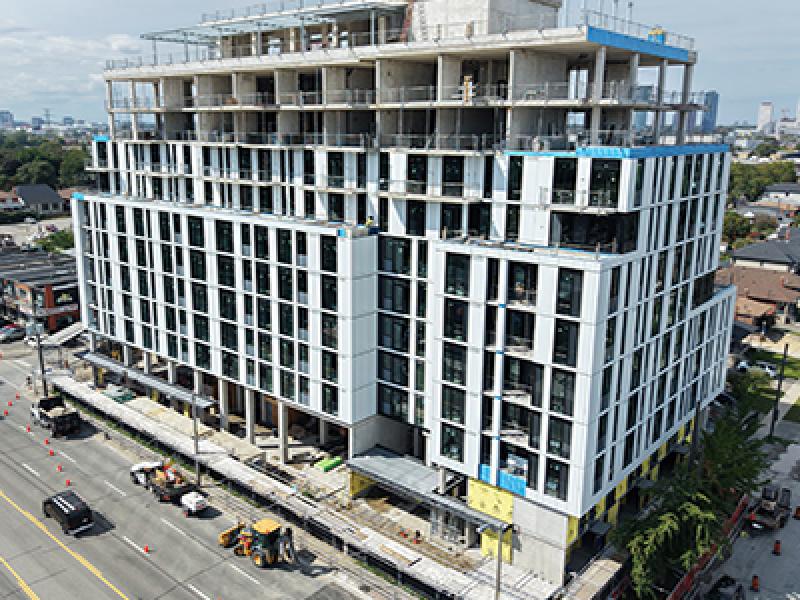




Peakhill Capital’s Peakhill Opportunity REIT (P-REIT) has closed on its first property purchases, two purpose-built rental buildings in Toronto.
P-REIT launched in January to acquire and manage income-generating apartment assets across the Greater Toronto Area and surrounding regions.
“We think it's the right time to buy multifamily,” P-REIT president and managing partner Cory Capland told RENX. “Having this REIT under Peakhill Capital positions us very well, given our expertise in the apartment space and specifically the CMHC (Canada Mortgage and Housing Corporation) financing space.”
Toronto-based Peakhill Capital was formed in 2019 as a commercial real estate asset manager with investment, financing and advisory services that now operates throughout North America. It has deployed more than $21 billion in capital across the full real estate stack.
The company’s commercial mortgage platforms target opportunities in primary markets and focus on multifamily, mixed-use, industrial and retail loans. Peakhill Capital is one of Canada’s largest CMHC-insured lenders in the apartment space, funding more than $14.8 billion across over 2,600 loans since inception.
Peakhill Equity Partners is an opportunistic equity platform focused on co-general partner and priority equity investments in ground-up and value-add real estate projects, according to its website.
Peakhill Opportunity REIT’s first acquisitions
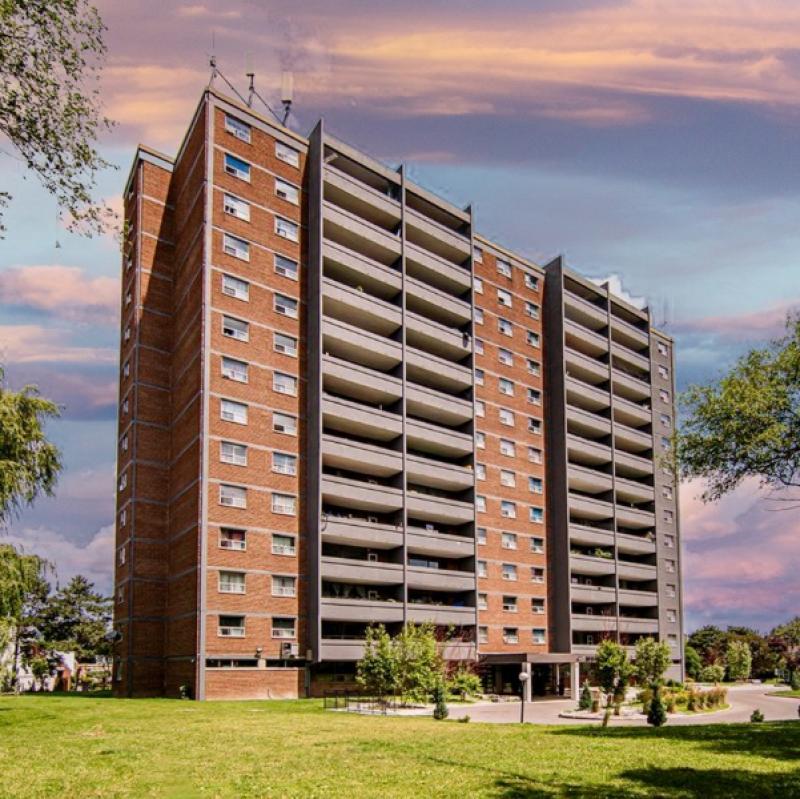
P-REIT partnered with First Olympic Capital, a Toronto-based private equity real estate firm led by president Brett Bitove, to acquire two 50-plus-year-old concrete highrise purpose-built rental apartment buildings in Toronto from an institutional investor for approximately $57 million.
The first is 12 storeys, 78,000 square feet and has: 56 one-bedroom units; 36 two-bedroom units; one three-bedroom unit; laundry facilities; common areas; and surface and underground parking.
The second is 14 storeys, 111,000 square feet and has: three bachelor units; 27 one-bedroom units; 66 two-bedroom units; 13 three-bedroom units; laundry facilities; a barbecue patio; and surface and underground parking.
Capland declined to provide the addresses or the name of the vendor, citing legal agreements.
Adding value to acquisitions
“It was broadly marketed at first, and the bids that came in weren't in alignment with the owner's expectations, so we came to the table and were able to work out a deal that made sense,” Capland said of the portfolio acquisition.
“We’re going to hold them for a long period of time as our REIT has a long-term outlook and we believe we've bought these assets very attractively. We've secured very good debt through Peakhill's expertise and the CMHC program.”
About two-thirds of the units in the buildings have not been renovated, according to Capland. P-REIT will add value to them through capital expenditures to make improvements.
Montreal-headquartered Cogir Real Estate will be the property manager for the two buildings.
Peakhill Opportunity REIT’s business model
P-REIT’s business model is to raise and deploy capital from family offices, investment advisors, high net worth individuals and institutions, and deploy it into apartment assets.
“We also have a sleeve of investments within the REIT where we're providing loans or preferred equity or some kind of structured capital where we're not the owner and we're not managing those assets day-to-day, but we're participating and providing that owner with capital to help them run their business and earning attractive and appropriate returns in the process,” Capland explained.
Capland has a background with the multifamily sector as, before joining Peakhill a year ago, he was Distrikt Capital’s vice-president of investments. There, he oversaw the acquisition, development and asset management of real estate across the GTA — with a focus on residential land and multifamily properties.
“Valuations for apartment assets are probably down 20 to 30 per cent from the peak,” Capland said. “Meanwhile, what's unique about apartment assets is that by utilizing the financing programs through CMHC, we’re able to get mortgages at interest rates that are significantly lower than mortgages for retail, industrial and office real estate.”
There are several acquisition opportunities that P-REIT is considering, but Capland couldn’t provide specific details. He’d like to see the trust acquire properties ranging in age from those built in the 1960s to some completed this decade, but noted the most attractive opportunities are in the value-add space.
“We have capital at the ready, we have a pipeline of assets that we're working through, and we believe that right now is a really nice window to go out and do deals,” Capland said.
“Our preference, from a deal perspective, is assets with 100 units as a minimum. Think $25 million to $35 million per property.”




 Industry Events
 Locations