Locations
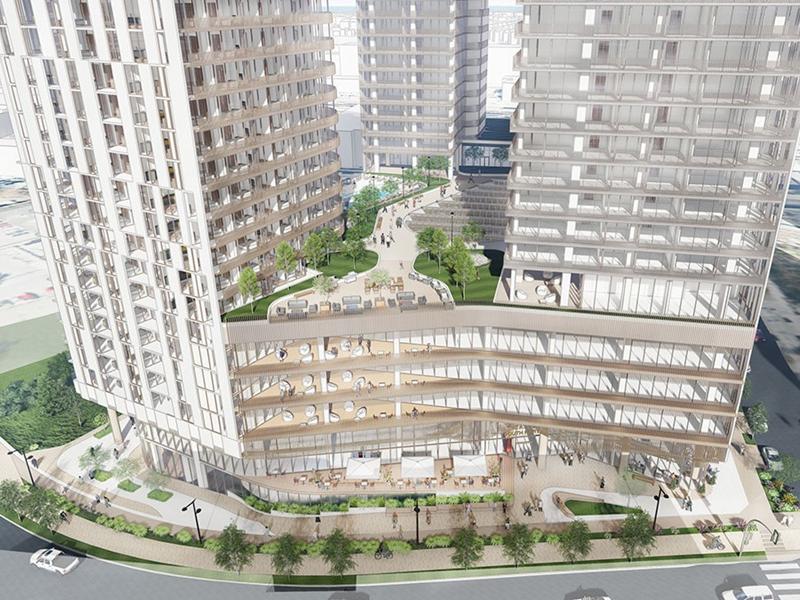





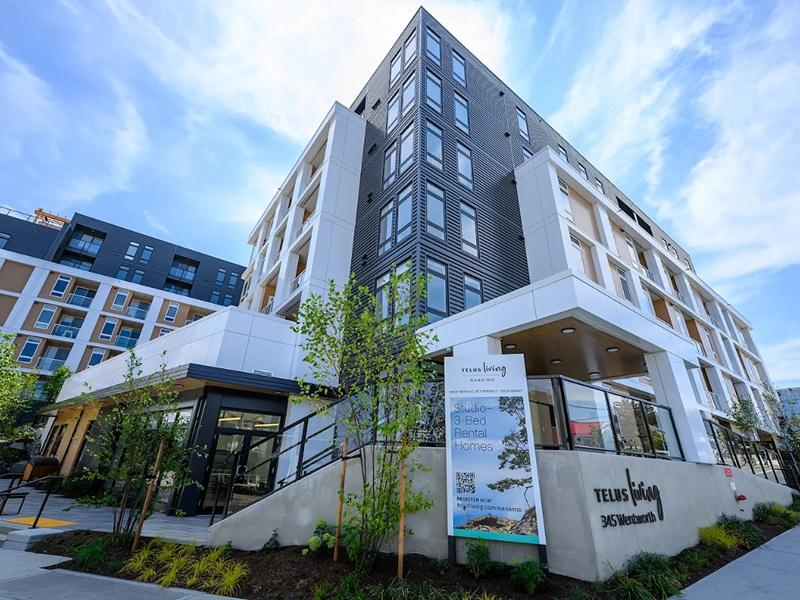
TELUS Living, a development branch of the telecom company aimed at converting many of its unneeded network sites into housing, has opened its second purpose-built rental community in B.C.
Located at 235 Wallace St. in downtown Nanaimo, the six-level building has 195 rental homes. The Nanaimo development is part of TELUS' long-term strategy to repurpose legacy telecommunications infrastructure into purpose-built rental housing as the company modernizes its network and completes the transition from copper to PureFibre technology, said Manasweeta Bhatia, vice president of corporate real estate at TELUS in an email interview with RENX.
The Nanaimo project comes shortly after TELUS Living completed another rental project earlier this year in Sechelt on the Sunshine Coast. That six-storey building has 59 rental homes ranging from studios to three-bedroom homes.
"The Nanaimo development represents exactly what TELUS Living stands for by providing purpose-built rental housing tailored to the specific needs of the community it serves," Bhatia said. "We've designed 235 Wallace St. with Nanaimo's unique character in mind, offering a curated lifestyle that blends a climate-conscious, Zero Carbon Design approach with top-tier wellness and smart-tech amenities."
235 Wallace St. had served as a central telephone exchange building and parking lot with some equipment and fleet parking functions prior to the redevelopment.
“Decades ago, telephone exchanges were built first, and then communities naturally grew around them because of distance limitations on copper lines,” Bhatia said. “This uniquely positioned TELUS with prime, centrally located properties across the country.”
Meeting a need in Nanaimo
The company launched TELUS Living in 2020.
This latest project is located downtown near both Vancouver Island University and Nanaimo Regional General Hospital, positioning it as an ideal home for students, educators and healthcare workers seeking modern, connected living, Bhatia said.
TELUS is collaborating with experienced development management, architecture, and construction partners on these residential projects, Bhatia said, adding that TELUS remains the long-term owner of the properties.
In 2024, Nanaimo city staff presented its Housing Needs Report to council that estimated that the city would require a total of 12,962 new housing units by 2031 to address local demand — an average of about 1,296 total units per year.
It noted that 55 per cent of those new homes would need to be rental units to keep pace with demand and to maintain a balanced vacancy rate, which staff marked at three per cent.
“The clear need for housing highlighted in the city's Housing Needs Report, combined with supportive municipal programs and a public-private commitment, creates the right environment for rental developments like TELUS Living Nanaimo to be completed and thrive, despite market headwinds,” Bhatia said.
The building is powered by the TELUS PureFibre network and the custom TELUS Living App, which provides keyless entry, smart climate control, leak detection, parcel notifications, visitor management and amenity bookings.
"I'm delighted to celebrate the opening of TELUS Living Nanaimo, a landmark project that strengthens our downtown as a vibrant, inclusive place to live," said Leonard Krog, mayor of Nanaimo in a release. "This partnership between the City of Nanaimo, our community, and TELUS demonstrates what's possible when we work together toward shared goals.”
The building also has a rooftop deck with an outdoor kitchen, BBQs, a fitness centre and resident lounge.
It's also equipped with a children's outdoor play area, outdoor dog park, pet care station, underground parking and bike storage and maintenance facilities.
Each home has a private balcony and individual A/C with Energy Recovery Ventilators (ERVs), Samsung SmartThings appliances and in-suite laundry.
TELUS aims build over 10,000 rental homes
The long-term vision is to expand TELUS Living into a national portfolio with more than 10,000 rental homes over the next ten years, Bhatia said. “With over 40 projects currently in progress or in our development pipeline, we are committed to being a long-term partner in these communities, delivering high-quality, tech-enabled housing for students, essential workers, families and downsizers across Canada.”
Up next is Point Grey, in Vancouver. It’s a 55-unit community that broke ground earlier this year. Located near UBC, it features ground-level retail below a mix of studios, one-bedroom and two-bedroom homes. They are also planning a 430-unit project in Vancouver’s Strathcona neighbourhood located near the new St. Paul’s Hospital.
Many other applications are in progress or in exploratory design stages across multiple cities and neighbourhoods in B.C. and Alberta, Bhatia said.


 Industry Events
 Locations