
 Locations





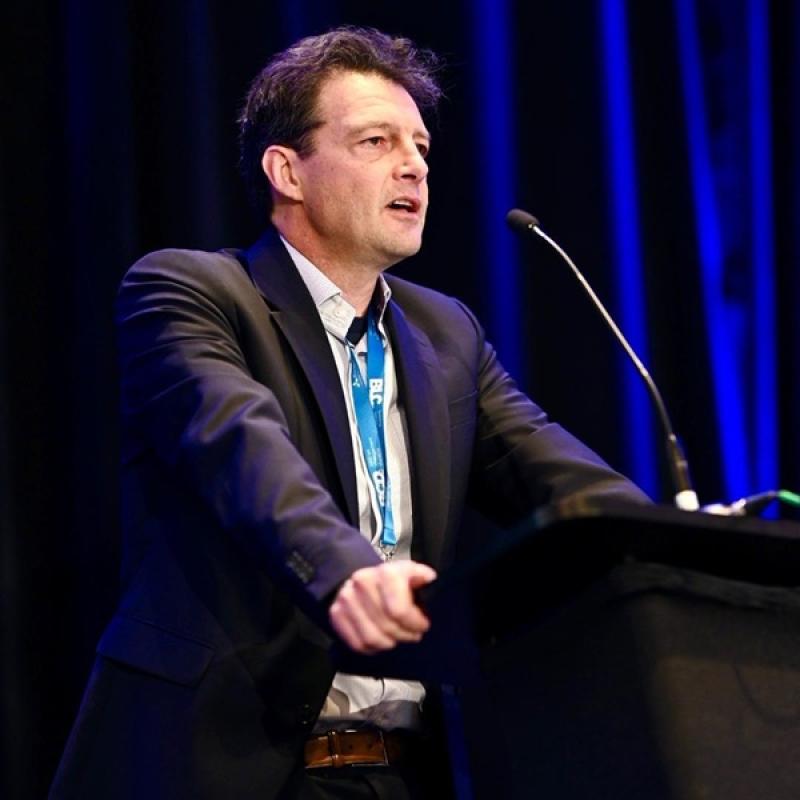
The global transition to a net zero economy is inevitable but how Canada will take advantage of the opportunity to drive the development of green buildings remains a question mark. So says Peter Howard, founder and director of Zfolio, an online platform used by financial institutions to calculate and understand their portfolio financed emissions.
He was the keynote speaker at the Building Lasting Change conference, hosted June 17 to 19 in Montreal by the Canada Green Building Council (CaGBC).
Howard said the transition to low carbon technology is inevitable because it is being driven by economics and irreversible trends in technology. "Technology has in the past two or three years crossed the threshold of scale and cost where it is now virtually inevitable based on economics, not based on policies or subsidies," he said.
"The low carbon transition is now a market-driven force,” he added, noting as an example that global EV sales grew from 2 million in 2019 to 18 million in 2024.
The costs of severe weather events
Meanwhile, climate change is reshaping the economy and is already costing Canadians greatly as floods, wildfires, and heat waves wreak havoc and grow in frequency and scale. Severe weather-related insurance losses in Canada in 2024 totalled a record $9.2 billion, and uninsured losses were probably double that amount, he said.
The economic impact of flooding, wildfires and heatwaves can reasonably be expected to grow by three to five times by mid-century, with some reports estimating related damages at about half of Canada’s annual GDP growth.
However, the growth in global emissions has been declining every year since 2022 and there is reasonably good evidence that global greenhouse gas emissions peaked in 2025, Howard said. “The world has successfully bent the emissions curve. We’re now on track for something like 2 to 2.5 degrees C in warming over the pre-industrial era.”
While that is a "serious amount of warming," it is "meaningfully better than what scientists feared even two or three years ago."
Howard said the country has a "massive" opportunity to create new resilient and decarbonized green buildings during the low carbon transition. Buildings account for about 20 per cent of Canada’s greenhouse gas emissions.
“The opportunity is Canada’s to lose," he said. "Build the companies, supply chains and technologies here, then scale them to compete globally."
$40B needed to bring Canada's buildings to net zero by 2050
Howard said mass retrofits would put Canadian tradespeople to work electrifying heating and hot water and creating buildings that generate and store their own electricity. Renewables and storage can be built from Canadian copper, nickel and critical minerals, and installed and maintained by Canadian firms.
In addition, mass timber buildings can be built, drawing on Canadian forestry products, he said. Resilient buildings and neighbourhoods can be created that resist flooding, storms and blackouts and that generate and store some of their own electricity and water supply.
Howard said $40 billion in investments are needed annually to get Canada’s buildings to net zero by 2050, with about 60 per cent of that spend in retrofits. However, those costs pay off, with $13 to $15 in economic benefit for every $1 spent on climate adaptation, he said.
He questioned why Canada isn’t already a leading player in this area. While Canada has a strong cleantech sector that punches well above its weight in terms of creating companies, “we don’t do so well at scaling them,” he said.
Part of the reason is that Canada has lived through several years of fragmented stop and start policy around cleantech. While "the world is moving, Canada has not been moving as quickly."
Canada needs both strong industry advocacy and policy that would make green building projects attractive and a private sector to finance and execute at scale, he said.
Howard said government should make physical climate risk data publicly available. Given that as many as two million homes in Canada sit in high flood risk areas and about 80 per cent of Canada’s cities are built on a flood plain, he questioned why it is so hard to understand or access flood maps that reflect climate modelling realities and why storm and wildfire hazard data isn’t freely available to building operators and technology companies.
He also noted that companies have a choice about what they do about risk: They can manage risk or simply accept it or insure it away. As it now stands, risk is also mostly invisible on financial statements.
The result is that "if you own several buildings in a flood zone, there’s nothing about that risk on your financial statements. The flood isn’t on the statement until it hits," Howard said.



 Industry Events
 Locations